
Armoured vehicles stood guard near the Colosseum in Rome on Friday as tens of thousands of students and workers marched across Italy over living costs and education funding. Police deployed in large numbers after earlier protests descended into rioting.
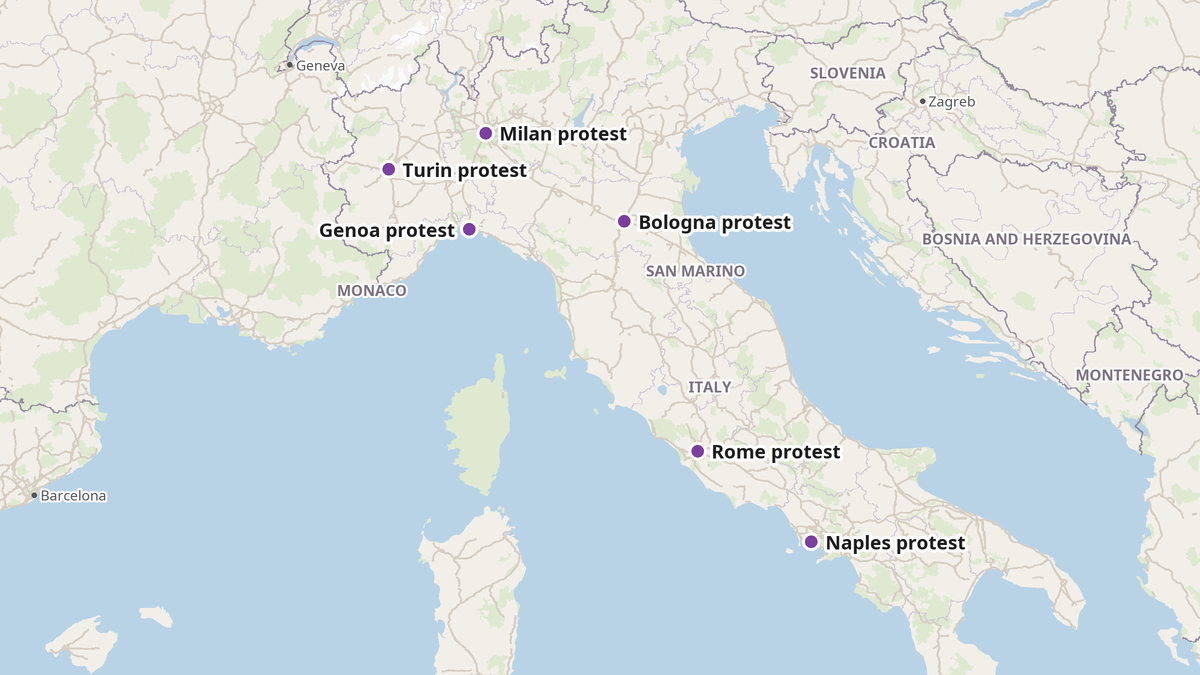
The marches ran through dozens of cities, including Rome, Milan, Turin, Bologna, Genoa and Naples. The Independent reported demonstrations scheduled in more than 50 cities. They followed weeks of student tent camps and school occupations, and a general strike called by the USB trade union put workers in the streets beside the students. Truck drivers, taxi drivers and farmers joined in.
The Cost to Our People
The figures behind the anger are stark. Prices paid in Italy for food, energy, transport and bills have risen by 68 percent since 2000, while the average wage fell by almost 5 percent.
Beatrice Chilelli, a 21-year-old university student in Rome, told AFP that students were "at a breaking point." "They can't afford to pay exorbitant tuition fees, and rent... which weighs heavily on their parents' shoulders," she said.
Medical students in Rome told La Repubblica they were marching after years on temporary contracts and salaries of just €1,300-1,500 per month, while paying €900 in rent. Hardly a living for people training to staff the nation's hospitals.
One group chanted: "We need more houses, not bombs!" Demonstrators also criticised the government over low wages, rising fuel prices and military spending.
Who Pays for the Wars?
Unions issued a joint call with counterparts in France, Greece, Spain, Turkiye and Morocco to end the wars in the Middle East and "the militarisation of ports." Their statement read: "Ports must not be used for the transport of weapons, ammunition, military equipment and troops. Dockworkers do not work for war!"
Al Jazeera reported that rallies in recent weeks have demanded an end to higher fuel prices and rising defence spending. The government last week agreed a €175 million aid package for truck drivers, farmers and fishermen hit by fuel prices linked to the war in the Middle East.
Prime Minister Giorgia Meloni's draft 2027 budget includes an annual bonus of €2,500 for workers under 30. "I hope this can provide answers for young people in general... who feel that the state doesn't care about them," she said at a news conference on Wednesday, stressing the measures were "not for those who smash windows."
Security Implications
The state's response has been heavy. Heavy police trucks were rallied to protect a military exhibition at the Circus Maximus, and the Colosseum was placed under lockdown after some protesters entered last Saturday. Authorities increased protection around landmarks including Milan's cathedral.
In Turin, scuffles broke out with riot police at the start of the march. In Vicenza, ANSA reported three people injured, including one hit in the head by a tear gas canister, after water cannon blocked protesters who tried to force through a blockade. In Naples, protesters chanting "let's block everything" headed for the central station, where armoured vehicles guarded the main entrance. In Bologna, students used dumpsters to block entrances to several high schools, and shopkeepers installed screens to protect their windows.
In Milan, where rioters looted shops and clashed with police after a cost-of-living demonstration two weeks ago, one protester said over a megaphone: "We're taking back the city. Let's make a mess."
Following the clashes of October 17-18, Meloni toughened laws on public gatherings and eased restrictions on detention of minors. The Independent reported the emergency measures include prison terms of up to five years and fines of €20,000 for joining a protest group that endangers public safety, and make parents financially liable when their children take part in vandalism and looting.
Beyond Italy's Borders
Banners in the crowds included one that read "the problem is not the foreigner but the lack of education." Another in Rome read: "Spain, France, Italy. A new '68 is coming." The student protests have drawn momentum from similar movements in France and Spain.
In France, interior minister Laurent Nuñez said Saturday looked like a "very high risk" day for public order and that he would again deploy 70,000 security forces. His ministry said 410,000 people took part in marches last Saturday. A nationwide strike is planned for November 5.
The pattern across three European capitals is the same. Wages lag, rents bite, and governments answer with riot police and one-off bonuses.
- italy protests
- student protests
- cost of living
- education funding
- general strike
- giorgia meloni
- usb union
- rome