
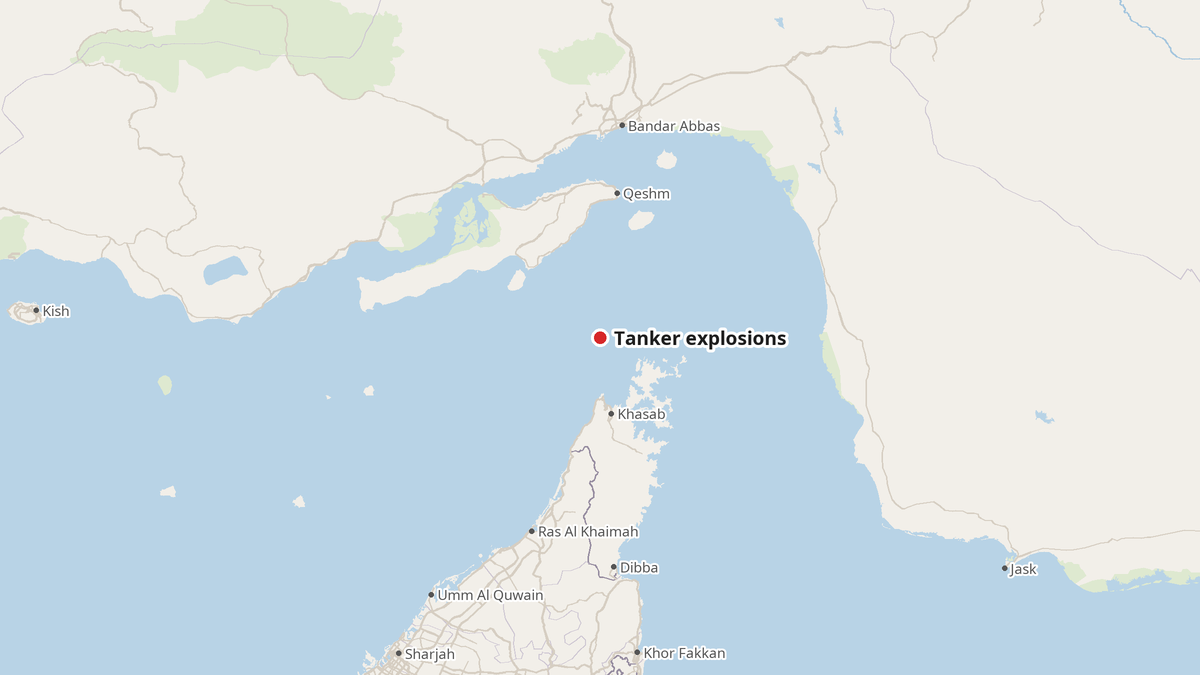
A tanker travelling east in the Arabian Gulf was struck by a projectile on Thursday, and casualties were reported, according to the UK Maritime Trade Operations agency. Crews on those ships don't set oil policy. They sail into the narrow waters where this war's costs now land.
The attack came as oil prices headed for a second consecutive weekly decline on Friday, the ninth month of the conflict. Brent was down 0.24 per cent at $95.59 a barrel at 8.53am UAE time, while West Texas Intermediate fell 0.54 per cent to $88.26. Both benchmarks were set for a weekly drop of more than 2.5 per cent, after plunging about 13 per cent the week before.
The relief at the pump and in the markets sits uneasily beside what's happening at sea.
Danger in the Strait
This week, Iran's Islamic Revolutionary Guard Corps claimed explosions on two supertankers carrying more than four million barrels of oil in the Strait of Hormuz. The strait carries two thirds of global crude supply and liquefied natural gas, so an attack there ripples far beyond the Gulf.
The Houthi spokesman Yahya Saree said a pumping station on Saudi Arabia's East-West oil pipeline and the Yanbu oil installation on the Red Sea coast were hit on Thursday. Saudi Arabia has exported much of its crude through that pipeline since the war began. The base reporting doesn't say who was hurt or how badly at those sites. What it does show is a conflict reaching infrastructure far from the original front lines.
Emirates NBD's senior economist described the market whiplash. "Renewed Iranian attacks on shipping in the Strait of Hormuz tempered hopes of a diplomatic resolution, lifting Brent 1.4 per cent to $92.76 a barrel on Wednesday," the economist said. Prices, in other words, are tracking each strike and each hint of diplomacy.
Washington Steps Back From Talks
The latest dip followed President Donald Trump's signal that he has no intention of resuming hostilities with Iran, after heavy losses for his Republican Party in the US midterm elections. That's a de-escalation of sorts. It isn't a peace track.
On Thursday, Trump said the US was no longer looking to reach an agreement with Tehran. "We don't need a deal with Iran. Those days have long since passed. We've got their money, hundreds of billions of dollars, and we've got their strait," he said on Truth Social.
The statement closes a diplomatic door at the moment when attacks on shipping continue. Without a negotiated settlement, the ceasefire-by-neglect leaves seafarers and the energy infrastructure they depend on exposed to the next strike. Markets may read the absence of renewed US military action as calming. Mariners in the Gulf have less reason to.
Markets Look Elsewhere
Spot gold climbed 1 per cent to $3,917.70 per ounce at 9.55am UAE time after hitting a more than one-year low on Thursday. It had dropped below $4,000 as markets expect a December US Federal Reserve rate increase.
Why This Matters: Falling oil prices can look like good news, but the volatility is driven by whether tankers get hit, not by a settlement. With Washington saying it no longer seeks a deal, no diplomatic channel is visibly working to protect shipping in a waterway that carries two thirds of global crude and liquefied natural gas. The people most exposed are the crews on vessels like the tanker struck Thursday, and the civilians in the region whose energy and economic security hangs on a strait that remains contested. A pause in US hostilities without negotiations leaves the underlying conflict unresolved, and that's the pattern that tends to prolong suffering rather than end it.
- oil prices
- strait of hormuz
- iran
- donald trump
- brent crude
- west texas intermediate
- iran war