
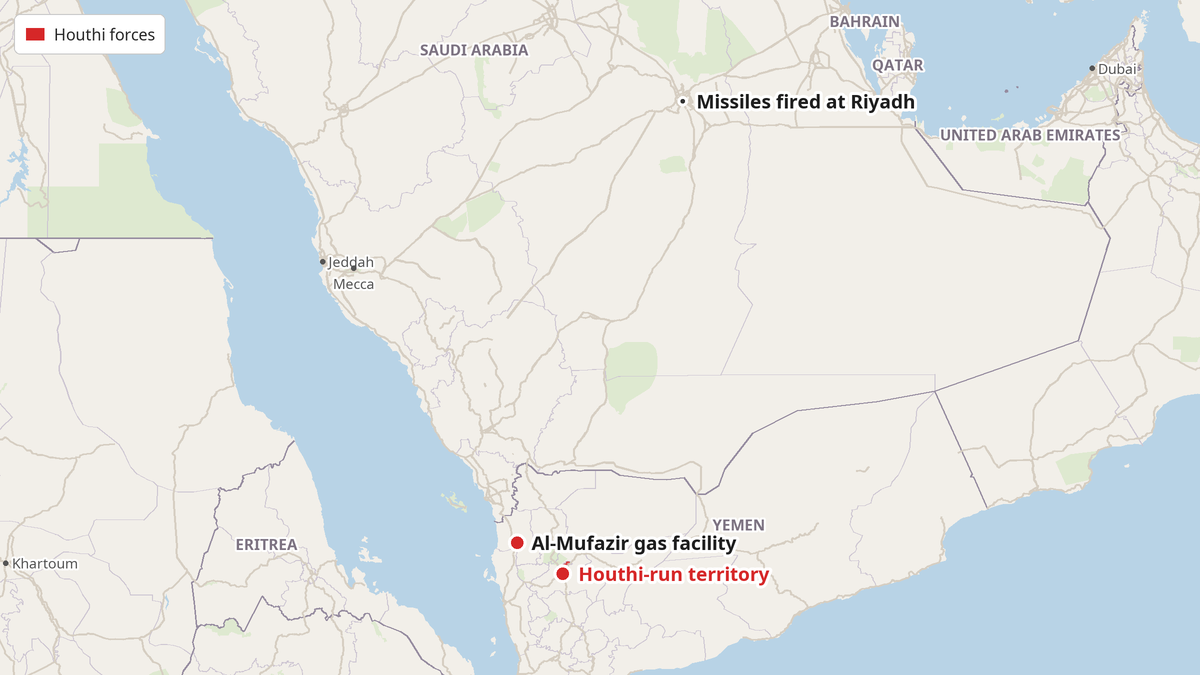
Saudi air defenses destroyed a ballistic missile and a cruise missile over Riyadh on Tuesday, and downed a second ballistic missile over the kingdom's south. Major-General Turki al-Maliki, spokesperson for the Saudi Arabia-led coalition fighting Yemen's Houthis, blamed the Iran-backed group in a series of posts on X. Multiple explosions rattled the capital, according to AFP. Residents got text alerts telling them to take shelter from an "aerial threat." A later message from the civil defence agency said the danger had passed.
The Houthis had no immediate comment.
The Security Picture
Tuesday's barrage didn't come out of nowhere. On Monday, the East-West oil pipeline in Saudi Arabia's Medina region was attacked again. A Saudi Ministry of Energy official told the state-run SPA news agency the strike caused a "limited fire" that was extinguished and that "pipeline operations were unaffected." No injuries or deaths were reported.
The pipeline matters far beyond the kingdom's borders. It's a vital route for Saudi oil exports because of Tehran's restrictions in the Strait of Hormuz following the US-Israel war against Iran. It has come under attack several times.
On Sunday, the Houthis said they struck Riyadh's business district. Saudi officials described it differently: falling debris from an "attempted attack" caused minor damage to the Aramco Tower. SPA images showed the deputy governor of the Riyadh region and other officials inspecting the building, with damage visible on several floors. Three days, three targets: a pipeline, a corporate tower, a capital city.
The Regional Threat
The Houthis have repeatedly hit Saudi oil infrastructure, including refineries and storage facilities, with drones and missiles. Those aren't improvised attacks on a military front line. They're strikes on the economic arteries of a state, carried out by a group the coalition identifies as backed by Iran, the same power now restricting traffic through Hormuz.
The fighting inside Yemen is escalating too. Clashes are raging between the Houthis and the internationally recognised government, which Riyadh backs. The coalition has supported a Yemeni government offensive to retake territory with air strikes.
The Houthi-run Saba news agency reported coalition air strikes on Sanaa, the Yemeni capital, which the Houthis control. Saba said the strikes hit the al-Mufazir gas facility in the Jadar district, north of the capital, and a building belonging to the state oil company in southern Sanaa. Civil defence teams were working to put out a fire in gas trailers at the al-Mufazir station, Saba said. The coalition didn't immediately confirm the strikes, so the Houthi account remains unverified.
Diplomatic Signals
Diplomacy hasn't disappeared from the picture. The National's live blog noted Saudi and Oman foreign ministers calling for diplomacy even as the coalition logged its interceptions of missiles and drones. Riyadh is doing two things at once: shooting down incoming fire and keeping a political channel open.
Why This Matters:
The Houthi campaign shows how Iran's proxy network can pressure energy infrastructure and a capital city at once, without Tehran firing a shot itself. With Hormuz restricted, the East-West pipeline carries outsized weight for Saudi exports, so each strike on it carries global consequences. Saudi interceptors held on Tuesday, and the pipeline kept operating Monday. But a defense that must succeed every time faces a standing disadvantage against attackers who need to succeed only once. Calls for diplomacy from Riyadh and Muscat point toward de-escalation, yet it's hard to see how talks gain traction while missiles are still falling on Riyadh. That's a perspective, not a prediction. The facts on the ground are three days of escalating strikes and a coalition still intercepting them.
- saudi arabia
- houthis
- yemen
- missile attack
- riyadh
- east-west pipeline
- aramco tower
- turki al-maliki