
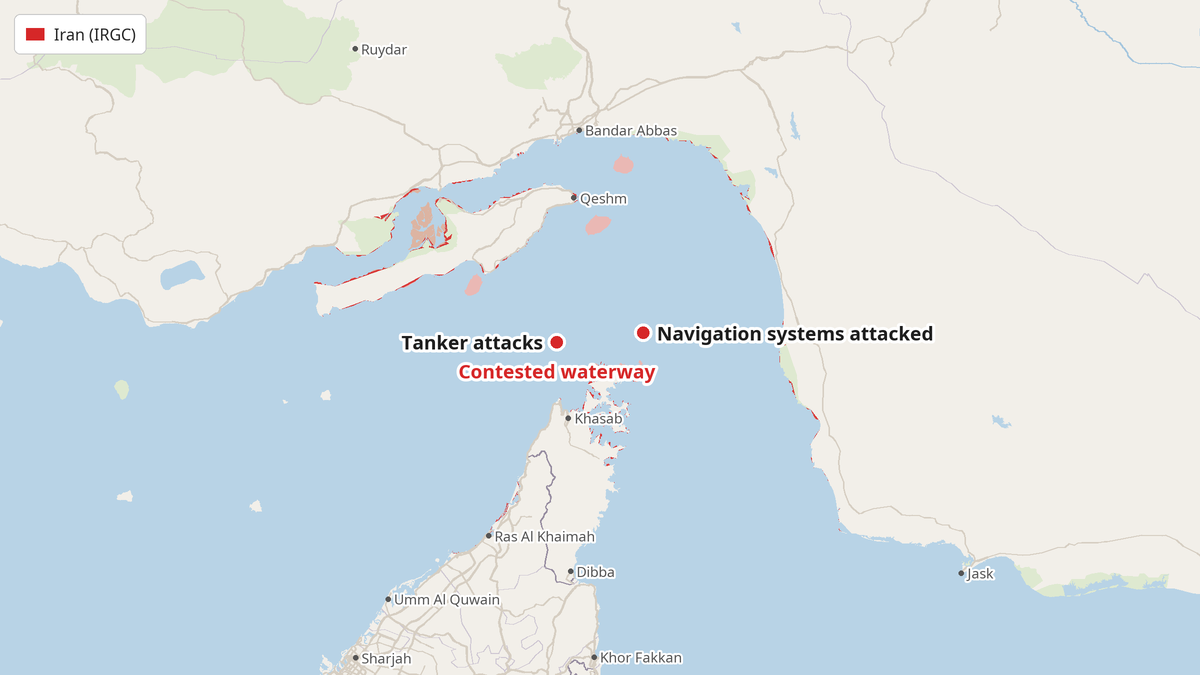
Iran is still striking vessels in the Strait of Hormuz even as it tells the world the waterway will never again be what it was. Mohammad Bagher Ghalibaf, Iran's parliament speaker and top negotiator, told Al Jazeera in an interview published Wednesday that the strait will "never return" to its status before the US-Israel war on Iran. His claim is a sweeping one. The strait, he said, holds no "free waters," and the 1982 UN Convention on the Law of the Sea "does not apply" there.
"The regulations within the Strait of Hormuz are governed by the laws of the two littoral states that border it," Ghalibaf said. He added that Iran and Oman reached an understanding to oversee the waterway as part of Tehran's seven-point proposal to end the conflict, which the base reporting describes as an eight-month war.
The Security Picture
While Tehran talks about sovereignty, its forces are still firing. Middle East Eye reported that direct attacks on Gulf states have stopped, but Iran continues to hit vessels in the strait as it looks to compete with the US for control over the waterway. Al Jazeera reported that Iran keeps targeting ships it claims are violating its conditions for transit.
The US hasn't stood down either. Washington is ramping up sanctions, continues its naval blockade of Iranian ports, and plans to block Iran's land-based supply routes as well. Secretary of State Marco Rubio pushed G7 allies to help "protect shipping" around the strait, where he said US forces would stay.
The bill is already large. The insurer Allianz Trade said Wednesday that Gulf countries face more than $200bn in damage and economic losses from the war, and that the figure could quadruple by 2030. "Physical damage across the region is assessed [at] just above $200bn, mostly concentrated in Hormuz-locked economies, especially in energy infrastructure," the insurer said.
Diplomatic Dead End
Ghalibaf said Tehran gave the US a response through a Qatari mediator that laid out seven conditions for peace talks. They include lifting the US naval blockade and sanctions, releasing Iranian frozen funds, ending fighting on all fronts, and an explicit announcement that the war is over. He said these demands were part of the Islamabad memorandum of understanding signed in June, and that implementing them is necessary before Iran enters negotiations with the US.
In other words, Iran wants the concessions first and the talks second. "The ball is now in the American court," he said. He also said that "what stands in the way of an agreement is our lack of trust in the United States."
He warned against new US attacks, saying President Donald Trump would face another defeat and political pressure from the new Congress that takes office in January. Iran, he said, is determined to move beyond a state of "no war and no peace," and he urged a sustainable deterrent capability that includes military capabilities.
The timeline has moved before. In September, Iran proposed a seven-day plan to reopen the strait and restart talks. Tehran has since said it could be cut to two days. Ghalibaf also said US officials asked Russian President Vladimir Putin to mediate direct negotiations with Tehran during a visit to Moscow.
The Regional Threat
Ghalibaf's remarks on Yemen show how Tehran frames its regional role. On the fighting between Saudi-backed government forces and the Houthis, he said "no one should interfere." Then he added that if both the Yemeni government and Saudi Arabia asked for Iranian help, "we would certainly offer our assistance to help resolve their conflict." Iran offered in October to facilitate talks between Saudi Arabia and the Houthis following a series of deadly attacks on the kingdom.
The pattern is hard to miss. Iran presents itself as mediator in a conflict where the Houthis have launched deadly strikes on a neighbouring state, and as the legal authority over a waterway whose shipping it is still attacking.
Why This Matters: The strait carries the energy that Gulf economies live on, and Iran is now asserting that it and Oman, not international maritime law, decide who passes. If Tehran's claim stands, every tanker transit becomes a negotiation with a government that is firing on ships today. The $200bn damage estimate, which Allianz Trade says could quadruple by 2030, shows what Gulf states have at stake. Iran's insistence that blockade and sanctions relief come before talks leaves Washington and its partners with a hard choice: pay up front or keep the pressure on. Neither path ends the risk to shipping soon.
- strait of hormuz
- mohammad bagher ghalibaf
- iran
- united states
- naval blockade
- sanctions
- iran-us negotiations
- shipping attacks