
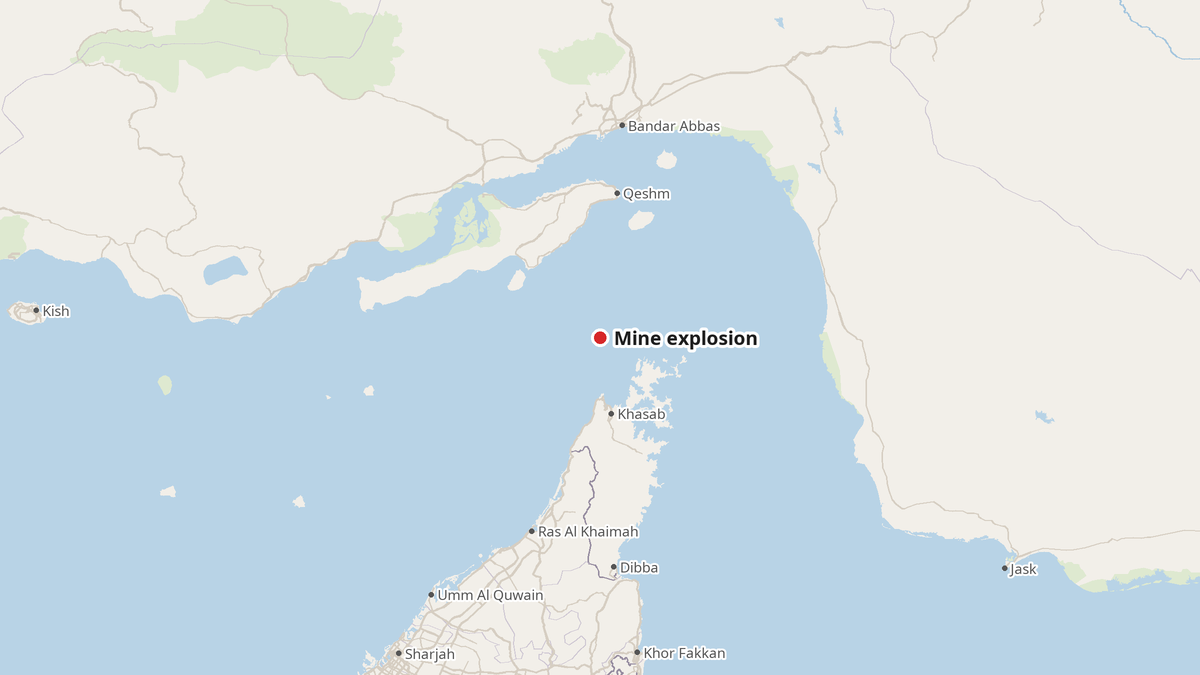
Iran's Revolutionary Guards navy said Friday that a tanker carrying liquefied gas struck a naval mine and suffered an explosion in the Strait of Hormuz, according to Iranian state media. The Guards said the vessel was using what they described as an "unauthorised and dangerous route." The claim could not be independently verified.
The cargo is described differently depending on the outlet. Reuters copy carried by the Times of Israel and L'Orient Today said the type of gas wasn't specified in the state media report. The New Arab and Ynet called it liquefied natural gas. AP, citing the state-run IRNA news agency, said it was a liquefied petroleum gas tanker. The Guards told IRNA the vessel ignored repeated warnings while transiting the eastern part of the strait.
The tanker wasn't identified. No information was available about casualties or the extent of damage. AP said there was no immediate report of the incident from the United Kingdom Maritime Trade Operations, a British military agency that monitors incidents at sea.
A Ninth Month of War
The explosion comes in the ninth month of the conflict, the US-Israeli war on Iran that began in late February 2026. The waterway has become one of the war's central arenas, and the pace of attacks on shipping hasn't let up.
At least 10 ships were hit in the first 10 days of November, according to data from the Washington Institute for Near East Policy. That followed 37 attacks in October, the highest monthly tally since the conflict began. Tankers continue to face attacks across the strait even as traffic rebounds and expectations of de-escalation have pushed oil prices down.
The incident followed Iranian media reports Thursday that four oil tankers were hit by explosions in the waterway after ignoring warnings and entering what Iran considers restricted areas. On November 12, RFE/RL reported, Iran's army said two oil tankers caught fire after hitting naval mines in the eastern part of the strait. Earlier in the week, the IRGC claimed explosions on two supertankers carrying more than four million barrels of oil. Iran continues to warn ships not to pass through the strategic lane without its approval.
Washington's Posture
The Times of Israel liveblog placed the item alongside a statement from US President Trump that the time has "long since passed" for an agreement with Tehran. Trump claimed: "we've got their money... and we've got their strait." It's a stark claim of control over a waterway where, by the Guards' account, vessels are being struck by mines for passing without Iranian approval. The two assertions sit side by side in the same coverage, and they can't both describe the situation on the water.
Ynet carried the tanker report alongside an IAEA warning that Iran's refusal to cooperate with inspectors has left major questions about its nuclear program unresolved. Those include its enriched uranium stockpile and a newly declared enrichment facility.
What Remains Unverified
Much of the picture rests on Iranian state media and IRGC statements. The identity of the vessel, its cargo, its flag, any casualties and the extent of damage remain unreported. The UK maritime monitor had not reported the incident when AP filed. Competing descriptions of the cargo, LNG in some outlets and LPG in others, underline how thin the confirmed detail is.
What the record does show is a pattern: repeated warnings from Iran, repeated strikes on tankers, and a monthly attack tally that climbed through October into November, nine months into a war that began in late February.
- strait of hormuz
- naval mine
- tanker explosion
- iran
- revolutionary guards
- liquefied gas
- oil tankers
- shipping attacks