
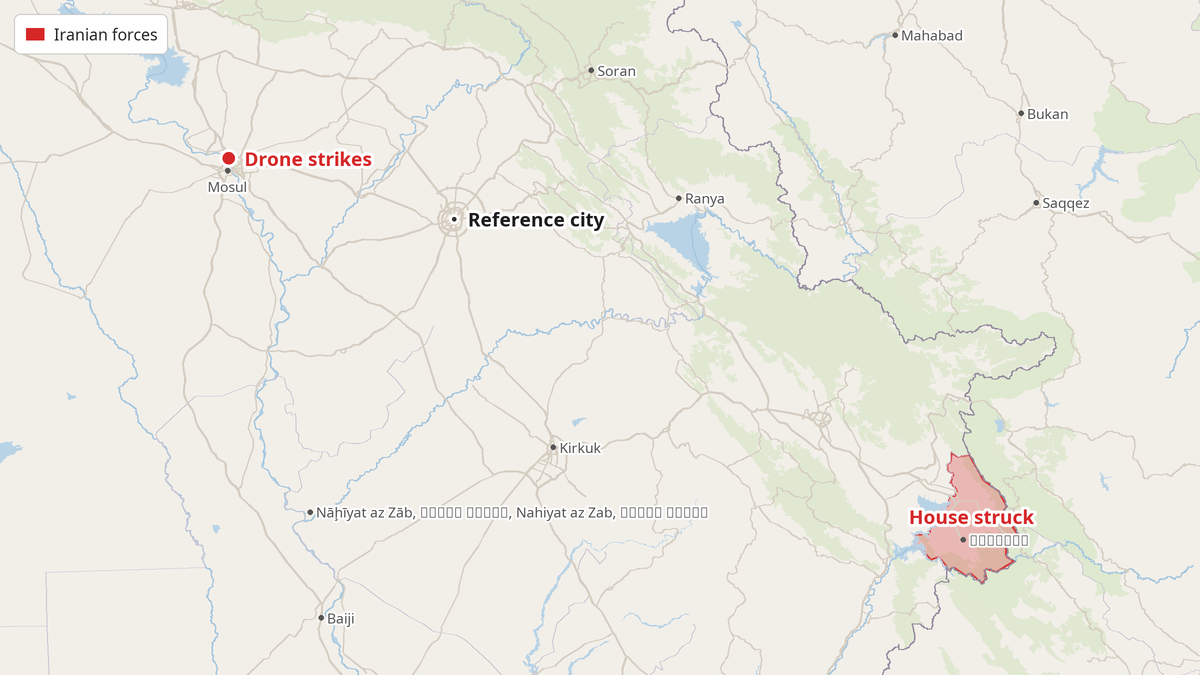
Iranian officials warned of a wider response if fighting with the United States resumed. On Wednesday, Iranian drones struck Kurdish Iranian opposition groups in northern Iraq. Tehran also threatened Gulf states that might let Washington launch attacks from their territory.
Threats Beyond Iran’s Borders
At a rally in Bandar Abbas, Hamidreza Moghadamfar, an adviser to the Revolutionary Guard Corps commander-in-chief, said Iran would expand its response beyond U.S. military bases if Gulf states hosted attacks. He warned that countries including the UAE and Bahrain would face a wider response, and said Iran would use a “new doctrine and new technology” against any U.S. or Israeli action.
Iranian officials also tied their warnings to the U.S. midterm election results. Democrats captured majorities in both the Senate and House on Tuesday. Two senior Iranian sources said Tehran welcomed the outcome, but worried President Donald Trump might seek to compensate with a military strike.
Parliament Speaker Mohammad Baqer Qalibaf, whom Reuters described as Iran’s chief negotiator, wrote on X: “Conscience or the cost of living, Americans said NO TO WAR, and we endorse this message.” He warned Washington not to ignore public opinion and attack Iran again. In another post, he said that if the U.S. government ignored the vote for change, “it will learn our NO comes with a Nightmare.”
Iran’s Supreme Leader Mojtaba Khamenei said U.S. hostility would continue regardless of which party held power. He cautioned against “even the slightest inclination towards submission” to the United States and said, “The US sees the end of its hegemony as distant; we see it as near.” Khamenei said Iran would respond to renewed U.S. aggression on a much greater scale. He called an “even more powerful Iran” the path to “absolute deterrence.”
Drone Strikes in Northern Iraq
Rudaw reported that two explosive drones struck a Komala base in the Alana valley of Balisan, about 90 km northeast of Erbil, at around 8:45 a.m. on Wednesday. Komala said the attack caused material damage but no casualties. Its forces at the site escaped unharmed.
A separate strike damaged a house in Tawella, in Halabja province, early Tuesday. A security source told Rudaw the property sustained extensive damage, with no casualties reported. Homeowner Alwan Abdullah told Rudaw: “We don't know what happened. We haven't seen any debris. Our house sustained heavy damage; our glass, doors, and windows are all broken.”
Ali Ranjbari, head of Komala's relations, called the attack an “Islamic Republic's drone attack on Komala Peshmerga” and accused Iran's Islamic Revolutionary Guard Corps of carrying it out. He said the strike formed part of a wider Iranian campaign to spread the conflict to Iraq and pre-empt a Kurdish uprising. Komala is one of five Kurdish groups in a coalition opposing the Iranian regime; the others include PJAK, PAK, PDKI and several branches of Komala.
The Kurdistan Regional Government faces pressure over the opposition groups. Its leadership in Erbil has criticized them and voiced concern that they could pull the region into conflict. Iran has tried to persuade Iraq to expel the groups. Iranian forces have carried out more than 1,000 attacks targeting the Kurdistan Region of northern Iraq, using drones and missiles.
The Wider Regional Conflict
The United States and Israel attacked Iran on February 28. Iran responded with strikes on Israel and Gulf states hosting U.S. bases. Fighting also broke out in Lebanon between Iran-backed Hezbollah and Israel, then spread to Yemen, where Iran-aligned Houthis struck energy facilities, airports and other targets in Saudi Arabia. Tehran declared the Strait of Hormuz closed, disrupting shipping and driving up global oil and gas prices. The United States imposed a naval blockade on Iran.
Iran's Foreign Ministry spokesperson warned that if the United States continued to ignore reality, “the consequences of this grave miscalculation will extend far beyond what you have already witnessed.” Supreme National Security Council Secretary Mohsen Rezaei said Washington must answer Iran's seven conditions fully and explicitly before “the Strait of Hormuz be opened.”
At a government-organized demonstration in Tehran on Wednesday, demonstrators burned American and Israeli flags and chanted “Death to America” and “Death to Israel.” The rally marked the 47th anniversary of the U.S. Embassy seizure. Trump declined on Tuesday to rule out resuming combat operations, while mediators including Qatar, Russia and China sought to advance negotiations and avert a U.S. strike.
- iran
- united states
- drone strikes
- midterm elections
- strait of hormuz
- komala
- iraq
- military deterrence