
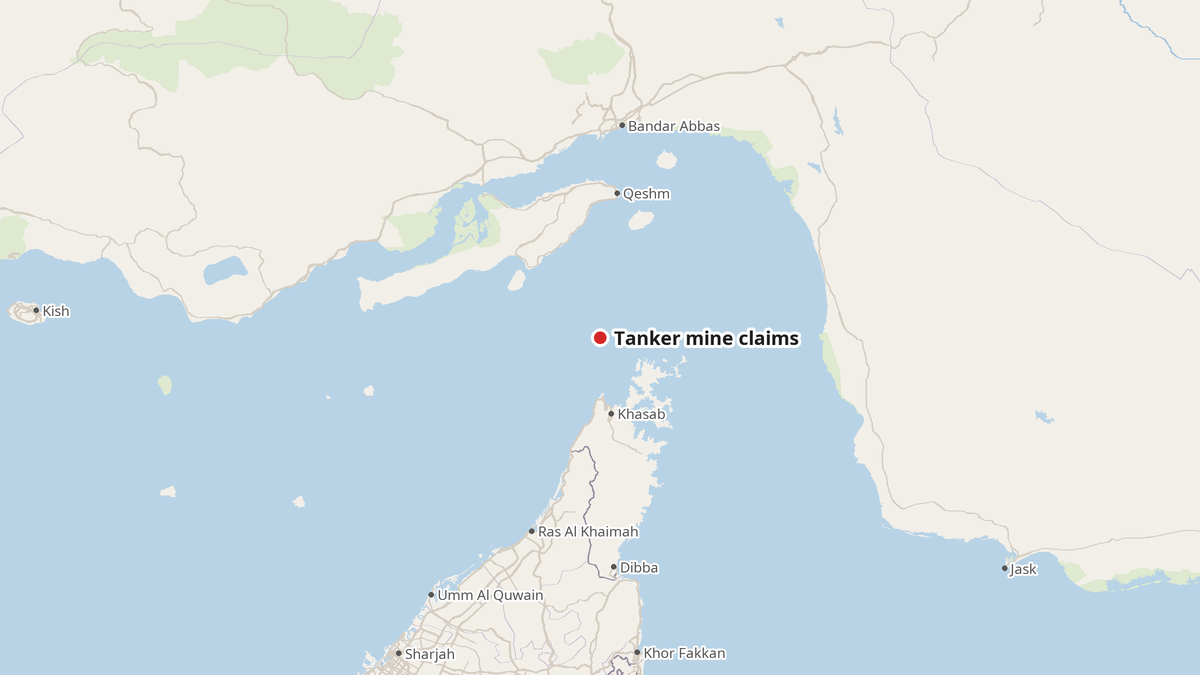
A US military aircraft fired precision munitions at the stern of the St. Kitts-flagged cargo vessel M/V Huda in the Gulf of Oman on Saturday, November 7, 2026, disabling the ship one day ago after, according to US Central Command, its crew refused repeated warnings to turn back. CENTCOM said the vessel had visited an Iranian port and tried several times to leave regional waters in breach of Washington's naval blockade of Iran.
A Blockade by Force
CENTCOM's own statement describes the method. Its forces directed the crew to abandon targeted spaces, and then a warplane struck the ship. The command says the blockade began in August, about three months ago, and that enforcement actions since July have redirected 147 commercial vessels and disabled five merchant ships that refused to comply. It also says US forces previously destroyed 10 Iranian commercial oil tankers, which it attributes to what it calls a Revolutionary Guard "multibillion-dollar shadow network."
The command put a figure on the economic damage it is inflicting. By CENTCOM's estimate, the blockade has prevented Iran from exporting more than $25 billion in crude oil in recent months. It stressed that "strict enforcement at sea continues against all ships entering or departing Iranian ports." That is a stated policy of cutting a country off from the sea, enforced with air strikes on civilian merchant vessels.
Task Force Iron Gate
Washington is now extending the squeeze overland. CENTCOM Commander Admiral Brad Cooper directed the formation of Task Force Iron Gate on November 7, according to one report; another says Friday. It is a staff of roughly 20 civilian and military personnel in Tampa, Florida, tasked with coordinating with other US agencies to stop the movement of weapons systems, dual-use technologies, sanctioned materials and what CENTCOM calls illegal revenue streams across Iran's land borders and the Caspian Sea.
"The establishment of Task Force Iron Gate reinforces the success of our ironclad blockade against Iran at sea," Cooper said. He said the effort would "constrain Iran's ability to finance terrorism, rebuild weapons factories, and replenish their military."
Michael Mulroy, a former US deputy assistant defence secretary for the Middle East, told Al Jazeera the task force will look at where "weapons systems are coming in, how they could potentially be cut off" and how "Iran is transporting its energy." He said that if President Donald Trump orders an escalation, it will likely target this "series of targets," and that, unlike Operation Epic Fury, which focused on military targets, these would be "economic and infrastructure targets."
Escalation on the Ground and at Sea
The strikes are not confined to ships. Iran's official news agency IRNA reported two explosions on Qeshm Island in the Strait of Hormuz on Saturday and several explosions in Jask, Sirik and Bandar Abbas. Trump confirmed new strikes on Qeshm Island a day earlier but called them "minor," adding that Tehran still wants a deal as Qatari-mediated talks continue.
Iran's state broadcaster IRIB reported early Sunday that two oil tankers were burning after striking mines, citing the IRGC Navy, which said both had turned off their tracking systems and tried to cross an unauthorized route in the Strait of Hormuz. The IRGC warned that any ship that cooperates with the US military and enters unauthorized zones "will certainly strike a mine." The UAE said it rescued 22 crew members from a burning cargo ship in the Gulf of Oman; the reporting does not link that incident to the Huda.
Sanctions and Stalled Diplomacy
On Friday the US Treasury sanctioned eight Canada-based money services businesses accused of helping Iran and IRGC-affiliated entities evade American sanctions, under Operation Economic Outcast, launched in August. The war between the US and Iran broke out in late February, about nine months ago, and the Strait of Hormuz, which carried roughly one-fifth of global oil supplies before the conflict, is now a major flashpoint.
Trump has threatened a new offensive, and Tehran has threatened broad retaliation against Gulf infrastructure, Reuters reported. Qatar-mediated talks have yet to produce a comprehensive agreement, with disagreements persisting over Iran's nuclear program, sanctions relief and the reopening of the Strait of Hormuz.
- us navy
- iran
- strait of hormuz
- naval blockade
- m/v huda
- centcom
- shipping
- iran sanctions