
Smoke and flames rose from King Khalid Airport in Riyadh on October 8, 2026, after Yemen's Iran-backed Houthis said they had attacked it. Twenty-three days later, the United States is pulling its people out.
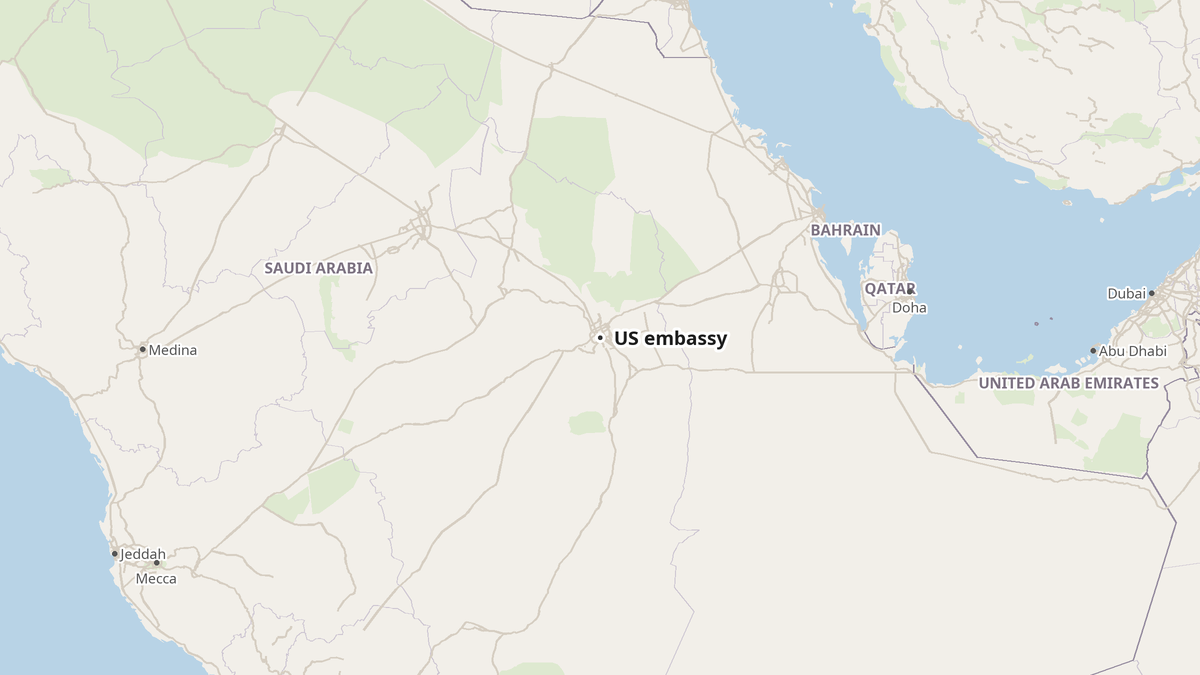
The US embassy in Riyadh said on Friday that non-emergency government employees and their family members were ordered to leave Saudi Arabia, effective October 23, because of safety risks. The embassy pointed to Houthi attacks on civilian airports and other critical infrastructure. The order took effect eight days before the announcement's date of October 31, 2026.
A Region Widening Its Wounds
The fighting between Yemen's Iran-aligned Houthis and the Saudi-led coalition backing Yemen's government has intensified in recent weeks. It has opened a volatile new front in the wider US-Israeli war on Iran, the base reporting says. That's the larger story here: a conflict that was already devastating for Yemenis is now being drawn into a regional war, and civilian infrastructure is increasingly in the line of fire.
The embassy warned that the danger isn't confined to one city. US government employees now require special authorization to use Saudi airports following recent missile and drone attacks. American citizens, it said, should expect the possibility of further attacks, airspace closures, flight cancellations and other travel disruptions.
Civilian Infrastructure Under Fire
Airports are where ordinary life moves: workers, families, pilgrims, the sick looking for care abroad. Strikes on them, or the closures that follow, ripple outward to people who have no say in the war. The embassy's own language, citing attacks on "civilian airports," underscores the point.
In Yemen itself, the government's armed forces spokesperson said the Houthis attacked Aden airport and the Maashiq presidential palace complex with ballistic missiles. The statement gave no details on casualties, damage, or whether the missiles hit their intended targets. That silence matters. Without confirmed figures, the human toll of the Aden strikes remains unknown, and residents of a city with a civilian airport have little way of learning how close the danger came.
The Saudi-led coalition said separately that it had intercepted and destroyed a Houthi drone launched over Saudi Arabia's Medina region. Medina is home to one of Islam's holiest sites and is visited by millions of Muslim pilgrims each year. A drone over that region is a reminder of how far the conflict's reach now extends, and how many people who have nothing to do with the fighting live and travel within it.
What the Departure Order Signals
A drawdown of diplomatic staff and their families is a blunt instrument. It protects Americans, as it should. It also signals that Washington judges the threat serious enough to thin its presence in a key partner state. The embassy's warning of airspace closures and flight cancellations suggests officials expect disruption to continue rather than fade.
The base reporting offers no casualty figures for the October 8 attack on King Khalid Airport or for the recent strikes in Yemen. What it does show is a pattern: missiles and drones aimed at airports and palaces, interceptions over holy sites, and a war that keeps finding new places to burn.
Why This Matters: The order to evacuate US dependents from Saudi Arabia shows how quickly the war on Iran has spilled into Yemen and the Gulf, putting civilian airports and a pilgrimage region within range of missiles and drones. Yemenis have lived with war for years, and each escalation raises the risk that civilians, not combatants, absorb the damage. The unanswered questions about casualties in Aden are a reminder of how little is known about who pays the price. Diplomats can leave; the people of Yemen and the region's travelers cannot. Without a political track to contain the fighting, evacuation orders like this one may become a recurring marker of a conflict widening beyond anyone's control.
- us saudi arabia
- houthi attacks
- saudi arabia
- yemen
- riyadh
- non-emergency staff
- us embassy
- missile attacks