
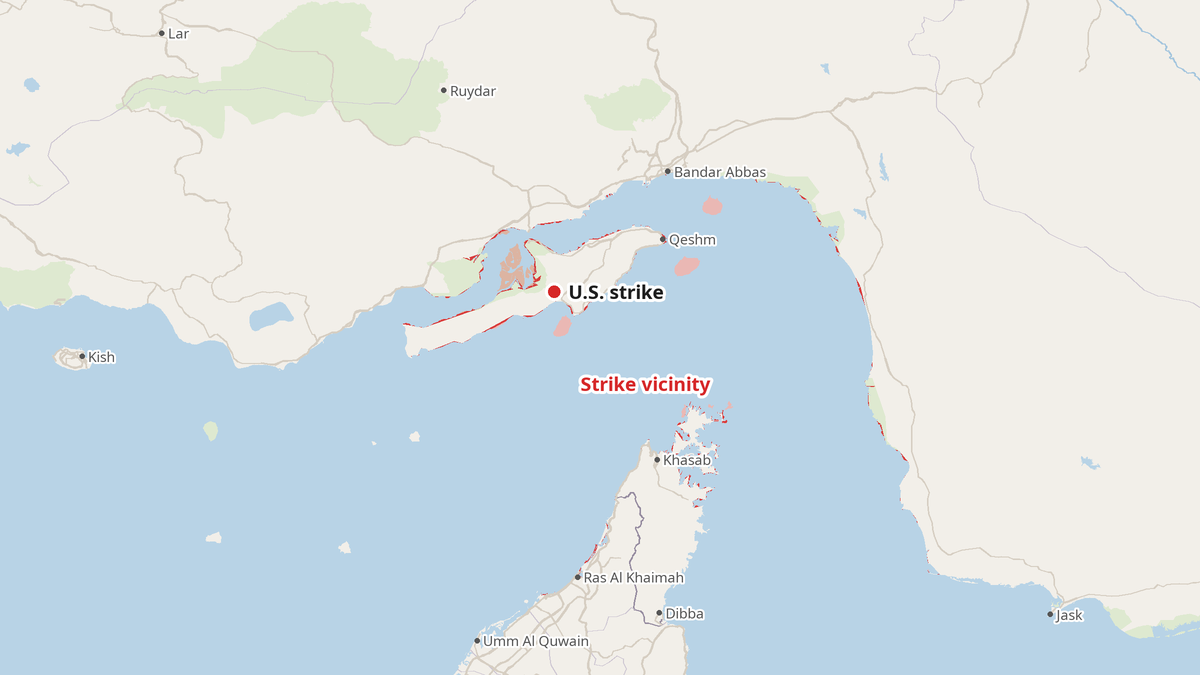
U.S. forces struck Iranian targets near the Strait of Hormuz on Monday, Nov. 2, the day before U.S. midterm Election Day, while thousands of American troops remained in waters off Iran enforcing a naval blockade. Iranian state media reported explosions on Qeshm and Hengam islands and near Bandar Abbas. Residents heard blasts; U.S. officials called the operation limited and defensive.
The people beneath the military claims
Iran's state-owned Islamic Republic News Agency reported several explosions in rapid succession on Qeshm and said witnesses saw two aircraft over the island. Fox News reported that residents heard five explosions and saw two aircraft. The island is home to an underground missile site, a naval base and a major desalination plant; analysts described it as the primary platform for Iran's “asymmetric” naval power.
A U.S. official told Fox News that the attack on Qeshm responded to Iran firing at a U.S. aircraft. The Associated Press quoted an unnamed U.S. official describing the targets as “Iranians using surface-to-air missiles against US assets.” Fox News quoted an official who said the strike was “defensive” and did not signal a return to broader U.S. attacks. The Pentagon referred questions to U.S. Central Command, which did not immediately respond to USA TODAY's request for comment.
Iran's Revolutionary Guard had reported destroying a U.S. MQ-9 drone east of the Strait of Hormuz. Tasnim, an Iranian news agency close to the IRGC, reported that the Islamic Revolutionary Guard Corps also said it shot down two U.S. military drones south of Qeshm. The competing military claims leave people living near strategic installations with the explosions, while officials trade assurances about the limits of force.
War at the waterway, costs beyond it
Thousands of U.S. troops remained in waters off Iran to maintain a naval blockade intended to prevent tankers carrying Iranian oil from reaching the global market. Another aircraft carrier and thousands of additional troops were on their way to the Middle East. The United Kingdom Maritime Trade Operations Centre said an Indian-crewed dhow was attacked Monday while traveling outbound through the Strait of Hormuz; the Omani Royal Navy rescued the surviving crew.
The wider war began on Feb. 28, when the United States and Israel launched strikes across Iran. The attacks triggered the closure of the Strait of Hormuz, higher oil and gas prices, and extensive damage to military, civilian and energy facilities around the Gulf. Fortune reported recent estimates put the war's cost at $47 billion, against U.S. national debt of $40 trillion.
The war and higher fuel prices had become political vulnerabilities for Trump's Republican Party ahead of the midterms. Trump had previously said the United States wouldn't strike Iran before the election and had suggested major military operations could resume afterward. On Nov. 2, he said the conflict was “not a war,” adding, “I don't know if you even call it a war because we haven't been doing any fighting for months.” On Fox News' “Hannity,” he called it a “soft war.”
Ballots, negotiations and the next threat
The election doesn't itself end the military apparatus in motion. A Democratic victory could constrain Trump's ability to sustain a prolonged campaign, but new members of Congress wouldn't take office until January. Trump told “Fox & Friends” Tuesday that the United States would “see” what its next move was. “I'm not looking to, you know, kill lots of people, but if we have to, we'll have to,” he said. He also said the U.S. military had “total control” of the Strait of Hormuz and called the latest strike “just a minor attack.”
Diplomatic contacts continued alongside military preparations. Qatar-led mediation sought to prevent a return to all-out war, with Qatari mediators passing messages between Washington and Tehran. They traveled to Tehran on Monday night to discuss a draft U.S.-Iran agreement with Iranian Foreign Minister Abbas Araghchi. Iran's plan, submitted in September, remained the focus of discussions and could be shortened and implemented in “two days,” including reopening the Strait and resuming talks on Iran's nuclear program, Ministry spokesperson Esmaeil Baghaei said.
Araghchi told IRNA, “Consultations through mediators are very intensive. We have presented our conditions and proposals, and everything depends on the political rationality of Washington.” Qatar's foreign ministry spokesperson Majed al-Ansari said both sides were reviewing proposals and that “intensive joint regional efforts” were underway. Iran's parliament speaker and chief negotiator, Mohammad Bagher Qalibaf, said, “The ball is now in America's court to prevent war.”
Iran also opened its third military training center in Tehran on Monday and announced plans to train 1 million paramilitary volunteers nationwide. Ali Kowsari, the Basij's deputy head for training, said 1,500 training bases would begin working across cities and towns. The negotiation table, the blockade and the training centers all sit within governments' decisions about war; residents and crews near the waterway face the consequences as those decisions continue.
- iran strikes
- qeshm island
- strait of hormuz
- united states
- iran
- u.s. midterm elections
- islamic revolutionary guard corps
- military operation