
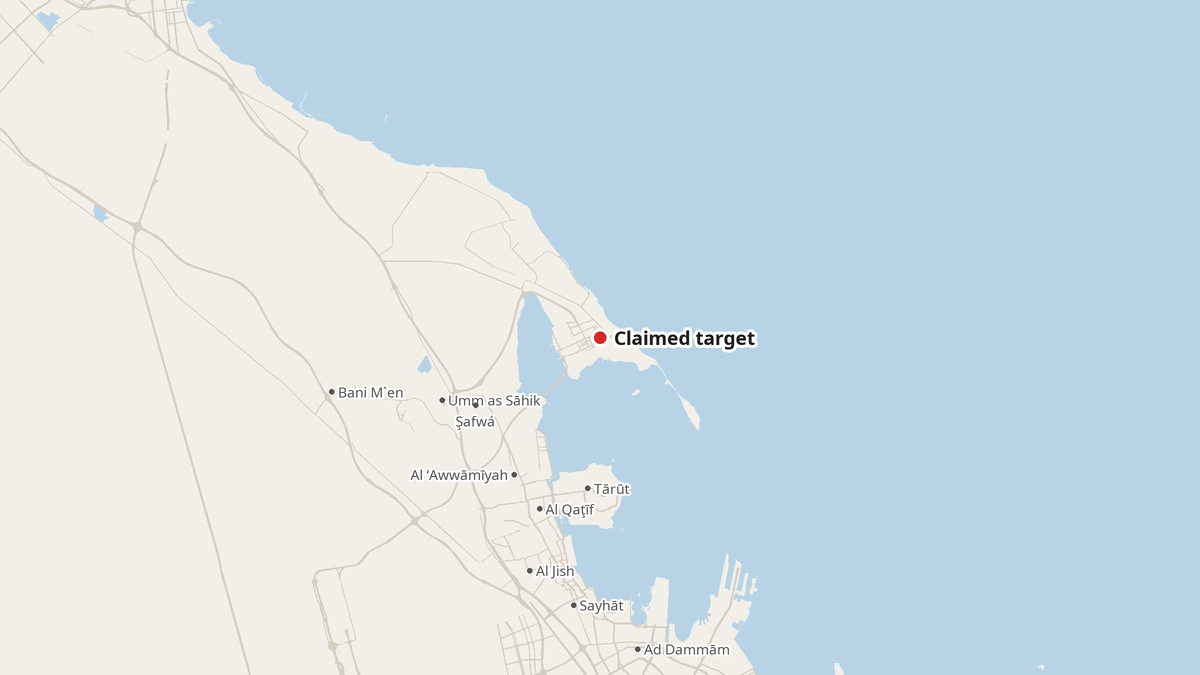
Debris from two intercepted missiles caused material damage to a building, a construction project and a vehicle in Riyadh, Saudi Civil Defense said, as the Saudi-led coalition reported intercepting weapons fired toward the kingdom. Yemen's Iran-aligned Houthi movement said on Oct. 27 it had struck Saudi Arabia's Ras Tanura oil refinery with a ballistic missile. The refinery claim remains unconfirmed by Saudi authorities.
The people and property caught beneath the competing military claims are easier to locate than certainty about what happened. The Houthis' military spokesperson, Yahya Saree, said the strike caused a fire at the complex. Bloomberg News cited a person familiar with the matter as saying Saudi Arabia had contained a fire near the terminal. Saudi authorities did not immediately confirm a strike on the refinery.
Oil infrastructure, military claims
Ras Tanura is the kingdom's largest refinery, with capacity of 550,000 barrels per day. Nearly all Saudi oil exports pass through Ras Tanura and Yanbu on the Red Sea; the Houthis have attacked both ports in the past. The refinery had been shut for a period in the early months of the Iran war as a precaution. Here, oil infrastructure sits inside the same military contest as airports, airbases and cities, while official accounts compete over what was hit and what was stopped.
The reports on interceptions didn't even agree on the tally. Asharq Al-Awsat reported that the Coalition to Restore Legitimacy in Yemen said it downed three ballistic missiles fired toward the Eastern Region, intercepted two ballistic missiles headed for Riyadh and destroyed four drones fired toward the Southern Region. Khaleej Times reported that the Saudi-led coalition intercepted three missiles and four drones. Al-Monitor reported that the coalition said it intercepted and destroyed two ballistic missiles launched toward Riyadh.
The arithmetic differs. The civilian damage in Riyadh, as reported by Saudi Civil Defense, does not. The coalition's account describes an apparatus stopping weapons in flight; the damage report records what still reached people and their property.
The fronts multiply
The Houthis also said they had attacked two military transport jets at Najran Airport and an airbase in Khamis Mushait. Al-Monitor's fetched text also reports Houthi claims of attacks on the Saudi defense ministry building in Riyadh and Abha airport. Saudi authorities didn't immediately confirm those attacks. Saudi civil defense authorities briefly issued an air-raid alert in Riyadh on Tuesday afternoon.
On the other side of the front, the Houthis said they had repelled an advance by Saudi-backed forces from the southern approaches to the Bab el-Mandeb Strait, an important Red Sea shipping route. Saudi-backed Yemeni government forces earlier in October pushed the Houthis from coastal areas they had seized in September, loosening the group's control over a vital Red Sea oil route. Houthi-affiliated Al Masirah TV reported Saudi strikes on the Yemeni city of Mocha; Saudi authorities didn't immediately confirm them.
The report offers no account of grassroots organizing or mutual aid, and no evidence about aid organizations. What it does show is armed authorities contesting strategic routes and infrastructure, with civilians facing alerts and debris while official statements leave key claims unresolved. The competing forces aren't interchangeable in every respect; the article documents their different actions and positions. But military control remains the organizing logic on each front.
A truce broken, talks underway
The fighting has shattered a 2022 U.N.-brokered truce between the coalition and the Houthis, who control Yemen's capital, Sanaa. Al-Monitor reported that intensifying hostilities had disrupted oil supplies and raised the risk of a wider regional conflict, eight months after the Iran war began.
On Oct. 26, Saudi Arabia, Turkey and Pakistan met Iranian officials in Tehran in an effort to reduce regional tensions. Egypt's parliament, which had said it was considering joining the three countries in a mutual defense pact, authorized the Egyptian military on Monday to help defend Saudi Arabia if asked. Diplomacy and military preparedness now share the same official agenda. The people living beside the routes, refineries and military sites remain exposed to what those decisions set in motion.
- ras tanura refinery
- houthis
- saudi arabia
- ballistic missiles
- drones
- yemen conflict
- oil supplies
- red sea shipping