
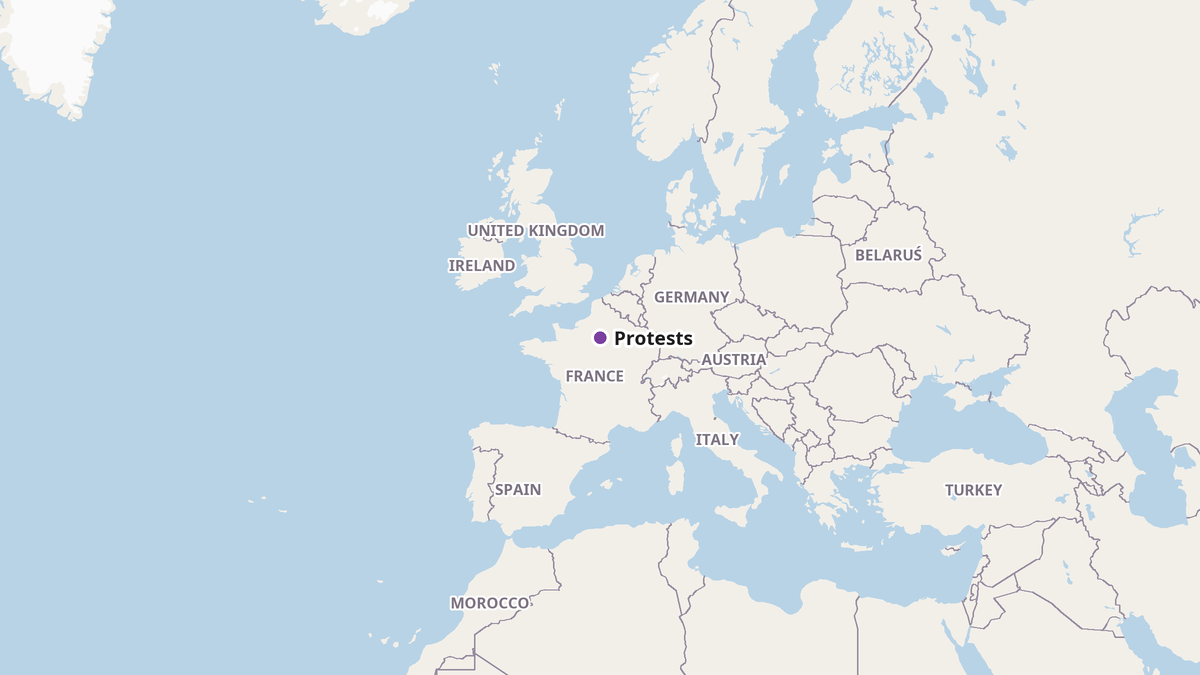
Italy's average full-time wage fell by almost 5 percent after inflation between 2000 and 2025. That squeeze helped bring tens of thousands of workers and students onto the streets as a general strike disrupted transport and public services.
The Italian protests formed part of a coordinated movement across more than 25 European countries on Friday. Demonstrators demanded higher wages and more investment in public services; some also opposed increased military spending. Protests were expected to continue through the weekend.
Wages and the Cost of Living
The wage figures place Italy's pressure in a European context. After inflation, average full-time wages rose by 7 percent in Spain, 11 percent in France and 20 percent in Portugal between 2000 and 2025, according to OECD wage data adjusted using Eurostat's price index.
Everyday costs have climbed, too. Eurostat, the European Union's statistics agency, said prices for items including food, energy, transport and bills rose by between 59 and 78 percent since 2000 in France, Italy, Spain and Portugal.
Demonstrations took place in more than 100 locations and cities across Italy, alongside a 24-hour general strike called by the Italian General Confederation of Labour (CGIL), Italy's largest trade union. Public- and private-sector workers joined the action, including people in schools and healthcare. The strike disrupted public transport in several cities, schools and some health facilities.
Protesters criticised stagnant wages and rising living costs. Organisers also said the government hadn't improved public services or protected workers' rights.
“Across Europe and among ordinary people, the demand for change is growing,” CGIL leader Maurizio Landini said at a rally in Rome.
Budgets and Security
Opposition leaders who joined the Italian demonstrations criticised Prime Minister Giorgia Meloni's government and its budget policies amid rising living costs. Elly Schlein, leader of the centre-left Democratic Party, said the 2027 Budget Law “does not have a vision for the future of the country” because it doesn't help industries but cuts funding for public healthcare and education.
Student groups have continued protests and occupations at schools and universities, with opposition to higher military spending becoming a rallying cry. Some demonstrators elsewhere also called for peace and more funding for healthcare and welfare.
Security featured prominently in Italy. The rallies followed a nationwide mobilisation on October 17 that descended into rioting and looting. Meloni's right-wing government then approved sweeping security measures and deployed the army alongside police at subsequent demonstrations. Authorities added police in several Italian cities where multiple demonstrations took place on Friday.
Demonstrators in Rome threw objects at the Ministry of Education, while some protesters clashed with police in Bologna, the news agency ANSA reported. In Milan, demonstrators set fire to a cardboard tanker and cardboard figures depicting Israeli Prime Minister Benjamin Netanyahu and United States President Donald Trump.
Planned strikes by air transport workers were cancelled for Friday. Separate airport-staff walkouts remained scheduled for Sunday at Milan and Venice airports.
National Protests, Shared Pressures
France's demonstrations inspired the wider movement. They began in September and descended into violent confrontations with police and looting. The Interior Ministry said on Tuesday that 146,000 people had taken part nationwide, including 28,000 in Paris. The CGT trade union put the national total at just over 500,000.
In Germany, the campaign group “Gen Z regelt” (“Gen Z sorts it”) said it was organising protests in 73 cities and towns. Roughly 4,000 people attended a demonstration at Berlin's Alexanderplatz square. Police said the Cologne protest drew fewer than the 5,000 people expected, though demonstrators still numbered in the thousands.
German protesters called for greater investment in education and opposed a possible return to compulsory military service. The rallies followed protests on 31 October that brought thousands into the streets, with violence reported in some cities.
Several hundred people gathered outside the University of Vienna in Austria, calling for more education funding and less spending on weapons. Police dispersed the youth-led protest after reported disturbances, using pepper spray and making several arrests.
Students in Croatia boycotted classes and protested in about a dozen cities, demanding greater investment in education, housing and public services rather than military spending. Demonstrations were also reported in the United Kingdom, Spain and Sweden.
Why This Matters: Italy's wage record puts purchasing power at the centre of the dispute: its average full-time wage fell after inflation between 2000 and 2025, while wages rose in the three other countries cited in the OECD comparison. The protests also put competing spending demands before national governments, as demonstrators seek more money for services and some oppose higher military spending. In Italy, Schlein's criticism of the 2027 Budget Law connects that argument to support for industry. Strikes have disrupted transport, schools and health facilities, and authorities have deployed additional police.
- european protests
- wages
- cost of living
- public services
- general strike
- trade unions
- education funding
- military spending