
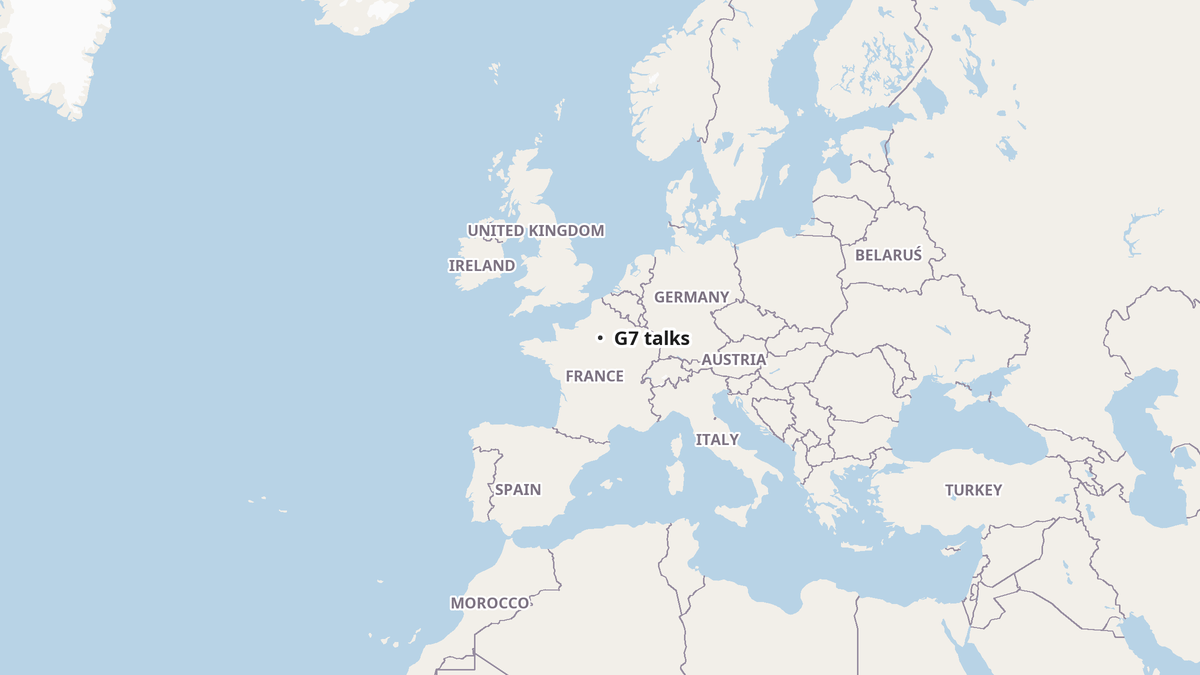
French Foreign Minister Jean-Noel Barrot says no deal touching Europe's security architecture can be done without the Europeans. He made the point on RTL radio as G7 foreign ministers gathered in Paris today for two days of talks, with Europe's place in the Ukraine settlement process the central question.
The meeting brings together the top diplomats of Britain, Canada, France, Germany, Italy, Japan and the United States. It's day one of two, and the timing is pointed. US-mediated talks between Moscow and Kyiv are scheduled to begin tomorrow in Abu Dhabi. Europe's governments aren't confirmed at the table in any formal sense, and they know it.
A Deal Drafted Elsewhere
European capitals fear Washington is steering Ukraine toward a settlement that favours Russia. US President Donald Trump gave them little comfort ahead of the Abu Dhabi round. He told CBS that a "very big" deal was in the making and that Ukraine would "end up with a little bit different shape." That's a careful way of saying the borders could change. Trump also said the deal would involve all of Europe.
Barrot pushed back. "Europeans will be represented and France will participate in these talks," he told RTL. He conceded he didn't know the details of any US plan. European leaders have long insisted that any agreement must include the continent in the negotiations and must not come at the expense of Ukraine's sovereignty.
Secretary of State Marco Rubio will attend both days, unlike the last G7 meeting, where he came for only one. He has suggested recent discussions made progress on security guarantees for Ukraine and the wider European region. Trump's envoy and son-in-law Jared Kushner has also described US efforts to develop a broader European security framework.
Kyiv's Caution
Not everyone is eager to move fast on that framework. Ukrainian President Volodymyr Zelenskyy has in the past expressed doubts over proposals for a new European security framework, suggesting such debates should follow, rather than precede, efforts to end the war. The sequencing matters. A framework drawn up before a ceasefire could end up shaping the terms of the ceasefire itself.
The awkward position for Europe is plain. It's being asked to help underwrite the security arrangements that follow a deal it didn't write, while arguing for a voice in the talks that produce it.
The Iran Question
The ministers also face a second front. Trump hasn't ruled out further military strikes against Iran. Washington has previously considered targeting suspected nuclear facilities, including the site known as Pickaxe Mountain, following the US midterm elections last week. Tehran denies the location is a nuclear facility.
European governments want a diplomatic resolution, not a resumption of force. Their attention is fixed on restoring normal shipping through the Strait of Hormuz, a critical route for international energy supplies. Trump recently said Iranian officials were keen to reach an agreement, which suggests negotiations remain possible.
The Paris meeting is among the final major diplomatic events of France's G7 presidency. The United States takes over the rotating presidency in 2027.
Why This Matters: Europe is trying to shape a settlement on its own continent while depending on Washington to broker it. The talks in Abu Dhabi will test whether European governments can turn declarations about representation into an actual role at the table. For taxpayers in member states, the stakes are concrete: any security framework that follows a deal will likely carry costs and commitments that national governments, not Brussels, will have to meet and answer for to their voters. A confirmed European seat matters less as a matter of prestige than of accountability. Governments that may be asked to fund and enforce an outcome have a legitimate claim to help define it. Hormuz adds an energy-security dimension: disruption there lands directly on European costs and competitiveness.
- g7
- ukraine
- russia
- iran
- marco rubio
- strait of hormuz
- european security
- diplomacy