
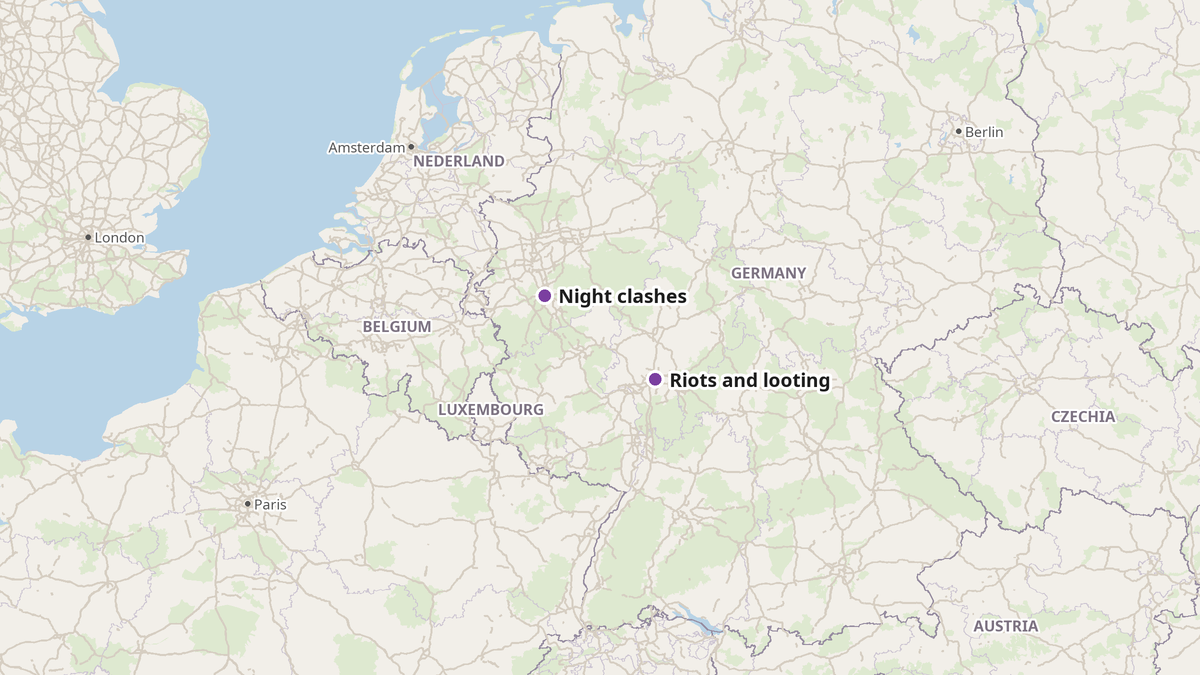
More than 100,000 young people took to Germany's streets on Saturday to demand investment in schools, housing, climate protection and affordable daily life. By nightfall, the story had changed. Rioters clashed with police in Frankfurt, Cologne, Hamburg and Berlin, and the demands of a generation were drowned out by smashed windows and petrol bombs.
The daytime marches, organised by a youth initiative called "Gen Z regelt" — roughly "Gen Z's got this" — passed largely peacefully. The alliance of school and university students said 120,000 people joined, according to bne IntelliNews. Reuters put the turnout at tens of thousands across dozens of cities. Marchers protested social spending cuts, crumbling schools and the cost of living. France 24 reported calls for better healthcare. Many also opposed the return of compulsory military service.
Frankfurt Becomes the Flashpoint
The worst of it came in Frankfurt. After a demonstration there, rioters attacked police downtown and looted stores, smashing shop windows and making off with streetwear and other goods. Authorities sealed off the main shopping street, Die Zeil.
Roman Poseck, interior minister of the state of Hesse, told a press conference on Sunday that hooded rioters damaged 17 stores, five of them looted. Police deployed 1,300 officers. More than 100 were injured. Officers arrested 54 people aged between 13 and 29. Frankfurt police reported petrol bombs, rocks and bottles thrown at emergency services, and used water cannon. One person suspected of breaking into a gun store and stealing two weapons was arrested, and the weapons were recovered.
"I am shocked by what I have seen, and there is no point in sugar-coating it," Poseck said. "Things cannot go on like this." Boris Rhein, Hesse's governor, said the violence "will not go unpunished."
Violence also broke out in Cologne, where police used water cannon. In Berlin, protesters attacked officers with bottles and pyrotechnics. In Hamburg, police said they were "repeatedly pelted with stones, fireworks and other objects" before organisers called the march off early.
A Contested Narrative
Poseck said most of those arrested were German nationals, yet he added that police estimate 1,000 to 1,500 violent troublemakers, "predominantly from an immigrant background." Federal Interior Minister Alexander Dobrindt of the Christian Social Union went further, accusing "violent left-wing groups and troublemakers from the immigrant community" of hijacking peaceful demonstrations. He promised "severe penalties."
Reuters reported that Dobrindt offered no evidence for the claim and did not say which groups had joined the demonstrations. The Telegraph's headline read "Germany blames migrants and leftists for violent protests." Dobrindt also said border controls had been tightened before the protests out of fear that extremist groups from abroad could exploit them, and that a heavy police presence across multiple locations had proved effective.
The organisers rejected the violence outright. In an Instagram statement, "Gen Z regelt" distanced itself from "any form of violence, as well as violent acts by other groups or individuals" who were not part of the demonstrations.
The Grievances Behind the March
The unrest follows a wave of youth-driven demonstrations in France, which helped inspire rallies in Portugal, Italy and Germany. In September, school students walked out in more than 100 German cities against the step-by-step return of military service. The new law passed in December 2025, less than one year ago. Chancellor Friedrich Merz told the Bundestag on October 14: "Not a single euro that flows to Ukraine is being diverted from social spending and education spending in our country." Saturday's marchers, citing cuts and crumbling schools, plainly weren't persuaded.
Why This Matters:
The risk now is that a peaceful movement of 100,000 young people, asking for schools, homes and affordable lives, gets defined by a few hundred looters. Officials have already tied the violence to migrants and the far left without publicly evidenced support, even as the Hesse interior minister acknowledged most of those arrested were German nationals. Blaming immigrant communities inflames exactly the divisions that make social investment harder to win. The demands themselves, covering education, housing, healthcare and climate, haven't changed. Whether Berlin answers them, or only the riots, will shape how a generation sees its democracy.
- gen z protests
- germany
- frankfurt
- riots
- police
- protests
- military service
- alexander dobrindt