
A strike on Riyadh's King Khalid International Airport killed 17 people and injured more than 300, the Jerusalem Post reported. The Times of Israel put the toll from an airport strike the previous weekend at 'at least 13.' The accounts don't match, and neither source gives a calendar date. Both say civilians at one of the Gulf's busiest air hubs are dying in a war that's spreading well beyond Yemen's borders.
The airport has suspended operations through October 17. It isn't the only target. The Jerusalem Post reported that the Houthis also struck the Saudi presidential palace complex on a Thursday, killing five. Those are the figures as reported. The material at hand offers no independent confirmation.
Civilian Toll
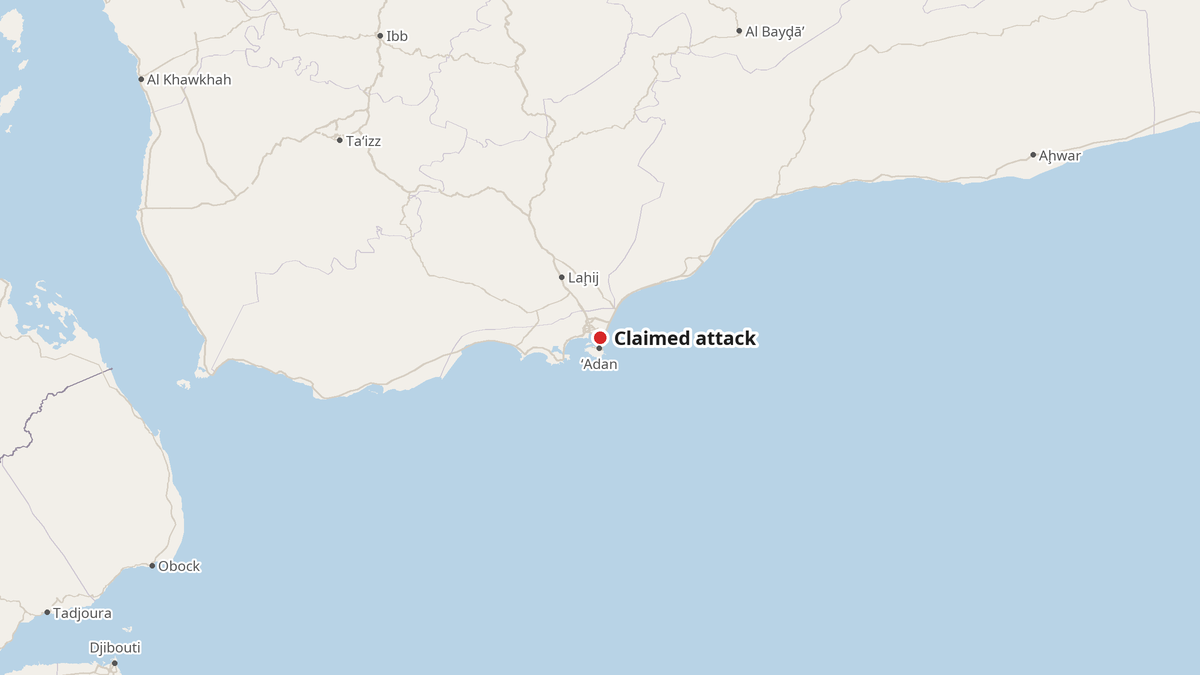
The fighting isn't confined to Saudi territory. Two missiles landed near the airport in Aden, Yemen's interim capital, police sources reported. The Houthis claimed responsibility, saying they were targeting a Saudi command centre. The base reporting gives no casualty figures for Aden and no details about damage.
Saudi Arabia said it intercepted and destroyed a ballistic missile launched toward Yanbu, two cruise missiles over the Red Sea and three unmanned aerial vehicles in southern Saudi Arabia and the Riyadh region. The coalition gave no details about launch sites, damage or injuries. After an early-warning alert, Saudi Civil Defence said the danger had passed in Khamis Mushait Governorate. It urged residents not to gather or film, and to call 998 in an emergency.
The U.S. Mission in Saudi Arabia warned citizens about possible airport attacks, airspace closures and flight disruptions. Airports in Jeddah and Dammam faced delays and cancellations. The mission also warned that filming or sharing images of missile interceptions and impact sites could bring legal consequences under Saudi law. For ordinary residents and stranded travellers, that means facing the threat of strikes while authorities bar them from documenting those strikes.
Who Is Arming Whom
Iran's involvement remains contested. The Wall Street Journal reported that many recent Houthi drone and missile attacks on Saudi Arabia used targeting intelligence Iran provided. The Times of Israel, citing sources familiar with Saudi and Yemeni intelligence, said Tehran supplied intelligence, training, tactical advice and targeting help. It said this support helped the Houthis make rapid territorial gains. The group controls Yemen's coastline along the Bab al-Mandeb Strait, a key passage for Saudi oil shipments.
Danny Citrinowicz, whom the Jerusalem Post described as a former Israeli official who headed the Iran branch of Israeli defense intelligence, called the connection 'very, very strong on the operational level.' He described it as 'strategic cooperation,' not a client-patron relationship. Adam Baron, a Yemen expert at New America, told the Wall Street Journal the Houthis' gains were 'undeniably' based on external Iranian assistance.
Iran rejects the charge. Foreign Ministry spokesman Esmail Baghaei said in September that the Houthis were 'entirely independent actors who make their decisions based on their own interests.' A separate Gulf News report quoted the spokesman saying Iran 'rejects any claim that Iran has played a role in Yemeni (Houthi) operations,' while repeating Tehran's offer to act as a bridge between the Houthis and Riyadh. The Jerusalem Post noted that members of Iran's Islamic Revolutionary Guard Corps had nonetheless commended the Houthi strikes.
Washington's Role
President Donald Trump urged Saudi Arabia to accept Israeli assistance against the Houthis. Asked if Riyadh should take Israel's offer of help, he said: 'Yeah, I do, sure. Israel has been very helpful to Saudi Arabia.' He added that Saudi-Israel normalisation could return to the agenda 'maybe more than ever.'
CENTCOM said more than 50,000 U.S. military personnel are deployed across the Middle East. It claimed Iran can't access $25 billion in oil export revenues and has had about $350 million in cryptocurrency frozen. CENTCOM described the IRGC as showing 'signs of increasing desperation.' The base reporting provides no independent verification of those claims.
At sea, an unknown projectile struck a tanker about 68 nautical miles northeast of Al Jubayl on October 16. The UK Maritime Trade Operations said all crew members were safe and evacuated, with no environmental impact reported at the time.
Why This Matters: The base reporting shows a regional war in which civilians are absorbing the damage: dozens killed in Riyadh, hundreds injured, a major airport shut down, and residents warned not to film the strikes that endanger them. Competing death tolls and denied foreign backing make accountability harder. Iran's pledge to mediate and Washington's push for Israeli involvement point in opposite directions. Diplomacy hasn't kept pace with the missiles. Each escalation narrows the room for negotiation, while people with the least say in it live under the flight paths. The airport remains suspended through October 17.
- houthi attacks
- saudi arabia
- yemen
- iran
- missile interceptions
- drone attacks
- united states
- king khalid international airport