
Court documents unsealed Thursday showed that the Trump administration held talks with Iran about deporting Iranians while the two governments were at war. The records described discussions about travel documents and “possible avenues for removal,” even as officials on each side called the other an enemy. Judge Ana Reyes ordered the government to give the court 24-hour notice of finalized plans to deport Iranians to Iran or another country, and five days’ written notice before carrying out any deportation.
Removal orders, regardless of the danger
In an Oct. 15 transcript, Judge Reyes challenged plans to send people to a country the US president had described as lawless and an enemy. She said those being sent back faced “at a minimum, a serious threat of certain death.” Justice Department attorney Dimitar Georgiev-Remmel replied, “Yes, your honor. The government is executing lawful orders of removal.” The Department of Homeland Security didn’t immediately respond to a request for comment.
The documents came to light through a lawsuit alleging that Trump administration immigration agencies shared confidential information about Iranian asylum seekers with Iran’s government, violating immigration regulations and putting Iranians at risk. The suit describes a coordinated effort by the US and Iranian governments to identify Iranians in Immigration and Customs Enforcement custody and pressure them to return. The Department of Homeland Security has denied sharing asylum application records with Iran.
Hundreds of emails exchanged by US immigration officials showed the two governments arranging flights for more than 100 Iranians in September and December 2025 and January 2026. Deportations to Iran have historically been rare: the countries lack diplomatic relations, and deportees could face persecution. The administration has also pushed deportations to countries reluctant to accept people, or with icy or no diplomatic relations with Washington. In June, an Iranian woman was among two dozen migrants the United States deported to the Central African Republic.
The shipping lane as leverage
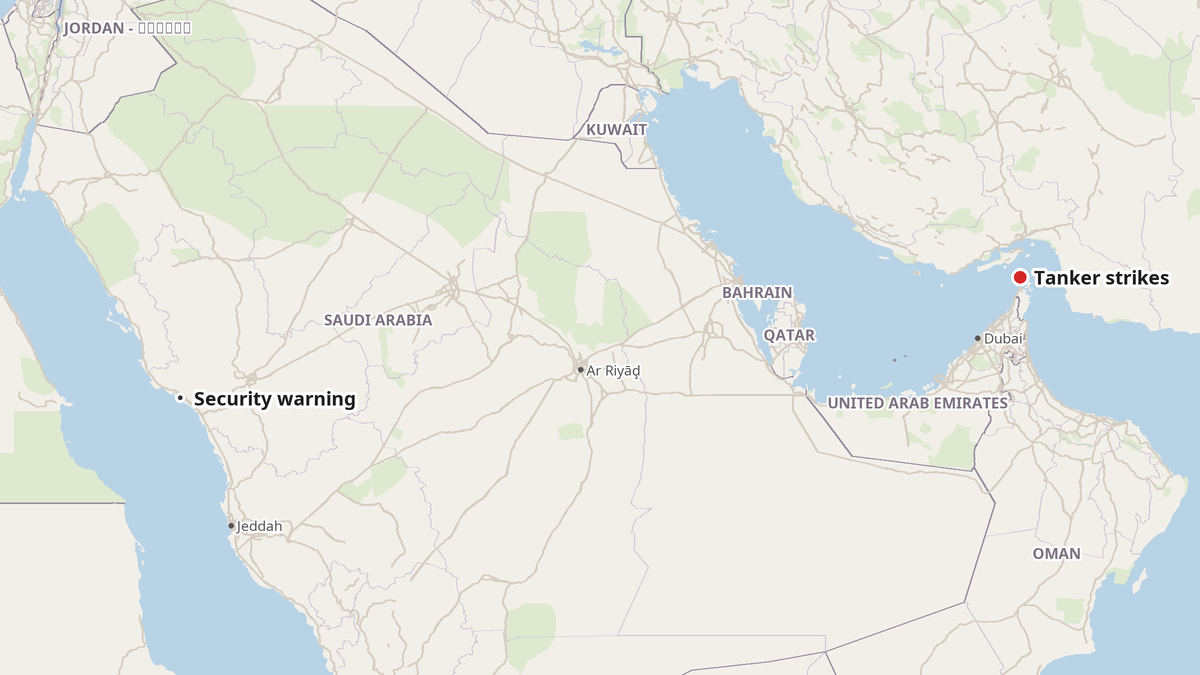
Iranian forces said at least five tankers were damaged in the Strait of Hormuz. In a separate incident, the British military reported that two projectiles struck a tanker off Qatar’s coast. No independent confirmation has emerged for the accounts of the tanker incidents.
The United Kingdom Maritime Trade Operations said the tanker was struck at 23:20 GMT on Wednesday, about 50 nautical miles north of Qatar’s Madinat ash-Shamal. It didn’t identify the ship or its flag, and no one had immediately claimed responsibility. Officials hadn’t confirmed the crew’s condition, the extent of damage or the environmental impact. UKMTO advised vessels to exercise caution and report suspicious activity.
Iran’s Islamic Revolutionary Guard Corps said a large oil tanker caught fire after hitting a mine while trying to pass through what it called an “illegal passageway” south of the strait. Iran’s army later said three more tankers struck mines and caught fire. Gulf News reported that the IRGC blamed the United States for encouraging vessels to use the route, saying the incidents would raise insurance costs for US taxpayers and regional allies.
Iran has sharply restricted traffic through Hormuz since the war began in late February. The strait normally carries about one-fifth of global oil consumption. The United States, meanwhile, maintains a naval blockade that Iran wants lifted, along with eased sanctions and the release of frozen Iranian funds. Tehran has tied reopening the strait to those demands. Last month, UKMTO said it was “struggling to accurately report” the true number of attacks because most ships now refuse to report them.
Negotiations under armed shadow
Qatar is working to mediate a return to talks on ending the war. A spokesperson for Qatar’s Ministry of Foreign Affairs said both sides were reviewing mediator proposals and discussions continued. Mediators were seeking support for a draft that included confidence-building measures; direct talks could follow if Washington and Tehran agreed on a framework. No date had been set for new direct negotiations, and neither side had publicly accepted a final settlement.
Unnamed Pentagon officials and military commanders told The New York Times that thousands of US air and naval forces, aboard more than a dozen ships and at bases in the Middle East and the United States, stood ready to resume major combat operations against Iran on President Donald Trump’s orders. Those preparations didn’t mean Trump had ordered new attacks, Gulf News reported. Trump said he was in no rush to decide; reported options included renewed strikes, negotiations, or continuing the naval blockade and economic sanctions.
The war began with US-Israeli strikes on Feb. 28 and spread across the region as Tehran fired missiles and drones at Gulf targets and shipping in Hormuz, disrupting global energy supplies, The Daily Sabah reported. The campaign badly damaged Iran’s military capabilities but didn’t produce a decisive outcome, leaving its nuclear program unresolved. Qatar’s mediation continues, while military forces and shipping restrictions remain part of the same negotiation over who can move, trade, and set terms.
- strait of hormuz
- iran
- tanker attacks
- qatar
- nuclear talks
- united states
- maritime security
- iran nuclear program