
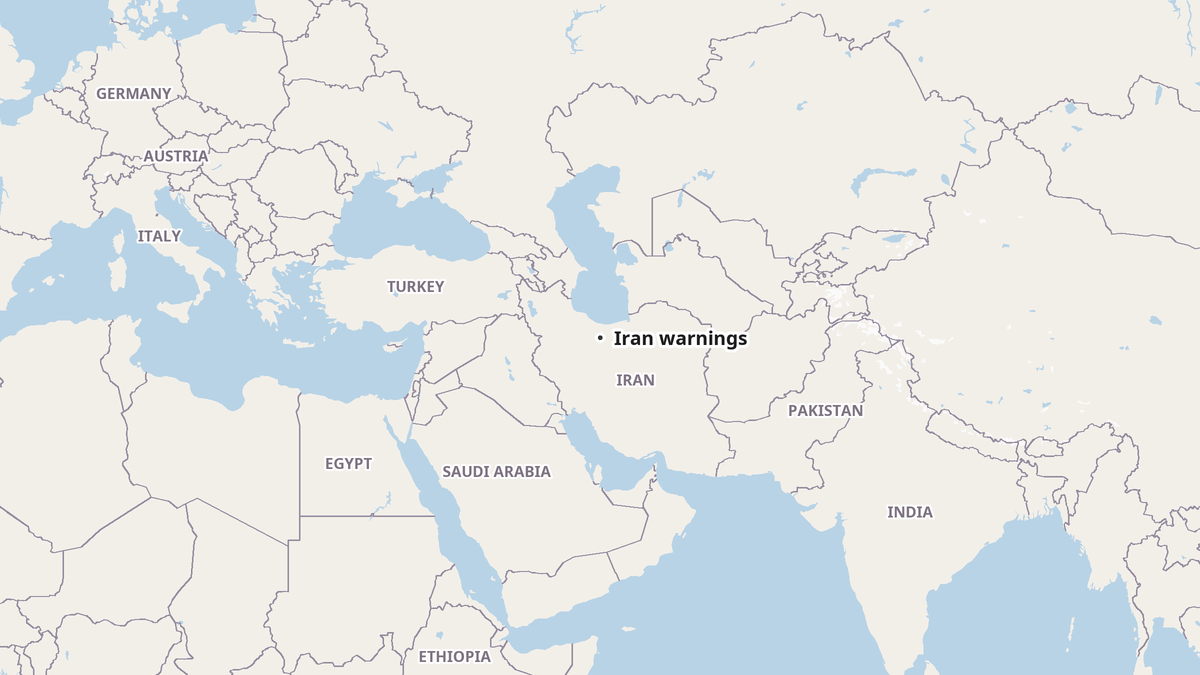
"NO SAFE DISTANCE. NO SAFE HAVEN. NO IMMUNITY." That was Mohsen Rezaei, former commander-in-chief of the Islamic Revolutionary Guard Corps, posting in capital letters on X on Wednesday, November 11, 2026, promising that every military base involved in any new US aggression, "from West Asia to Europe," would be a legitimate target for Iran's "lethal strikes." Gulf News was careful to note the post is a warning of potential retaliation, not confirmation that Iran has selected or attacked any specific European installation. Iran has not published an authenticated operational target list. The threat arrives anyway, as threats do, fully formed and unverified.
The Apparatus Speaks
In a separate interview with Lebanon-based Al Mayadeen, Rezaei went further. Retaliation, he said, wouldn't be limited to nearby American bases. European installations could be hit if US aircraft used them to launch attacks, and he mentioned remote islands Washington might consider beyond Iranian missile range. He claimed Iran's offensive and defensive capabilities are now considerably stronger than when the war began. No independently verifiable evidence backs that up. He also said Tehran wasn't negotiating directly with Washington and wouldn't surrender its enriched uranium stockpile or ship it abroad.
The man issuing these warnings may soon be doing the negotiating too. Al Jazeera's Resul Serdar Atas, reporting from Tehran, said the Iranian leadership has been discussing whether to appoint the hawkish Rezaei as chief negotiator, replacing Parliament Speaker Mohammad Bagher Ghalibaf. "In Tehran, there have been voices saying that if this status quo goes on for quite a long period of time, Iran will not wait and might take pre-emptive action," Atas said. Meanwhile Ghalibaf told Al Jazeera the Strait of Hormuz will "never return" to its pre-war status and that "the ball is now in the American court." Oddly, Vice President JD Vance reportedly asked Rezaei for a meeting in an October letter, according to a report cited by i24NEWS. So the hawk is both the threat and the phone number.
Who Benefits, Who Pays
Washington's side of the ledger reads just as cleanly. CENTCOM says US forces "continue to work around the clock" enforcing an "ironclad" naval blockade against Iran, and is working with other US agencies to stop the IRGC moving weapons systems, dual-use technology and "illicit revenue" over land routes and the Caspian Sea. That builds on Task Force Iron Gate, announced five days ago. President Trump says he's prepared to return to war if the Qatar-brokered diplomatic track fails. Secretary of State Marco Rubio, speaking on November 10, after Republicans took losses in the November 3 midterm elections, said economic pressure is working so well that large-scale military operations are unnecessary.
Al Jazeera's Alan Fisher, in Washington, put the motive plainly: "the key issue for this White House is always to be in a position where Trump can declare victory." The war is described in the reporting as a political liability for Republicans, and Trump has authorized Vance to pursue renewed negotiations. None of this is about the people living under the blockade or beneath the missile paths. It's about who gets to announce the outcome.
The market, at least, is honest. Brent futures settled $1.27, or 1.39 percent, higher at $92.76 after Tehran rejected the US proposal to move its 60 percent enriched uranium stockpile to a third country. US West Texas Intermediate gained 49 cents to $86.53. The previous session's prices had first fallen by more than $3 a barrel when US officials played down further strikes, then pared losses when an Iranian official said no talks were happening. Barrels rise and fall on the sentences of men in offices.
Diplomacy as Stalling Mechanism
Reuters reported that Iran submitted a nuclear proposal through Qatar, while Tehran insists Washington first address its seven conditions for ending the conflict. Ghalibaf said "what stands in the way of an agreement is our lack of trust in the United States," and that Washington must "make and announce" a decision on the latest Iranian proposal. The IRGC chief, per Al Jazeera's live blog, says missile development will continue despite threats and sanctions. Ghalibaf talks of moving beyond a state of "no war, no peace" through "sustainable deterrence." Even the language of peace is a language of armament.
The base reporting contains no mutual aid, no cross-border organizing, no one from below. That absence is itself the story: every voice quoted here holds a title, a rank, or a command. Iran's foreign ministry, meanwhile, spent Wednesday designating Argentina's navy and air force as terrorist organisations, answering Buenos Aires' late-March designation of the IRGC, about seven months ago, a tit-for-tat exchange of labels between states while the blockade tightens and the threats multiply.
- iran
- mohsen rezaei
- us iran nuclear talks
- strait of hormuz
- us military bases
- irgc
- oil prices
- marco rubio