
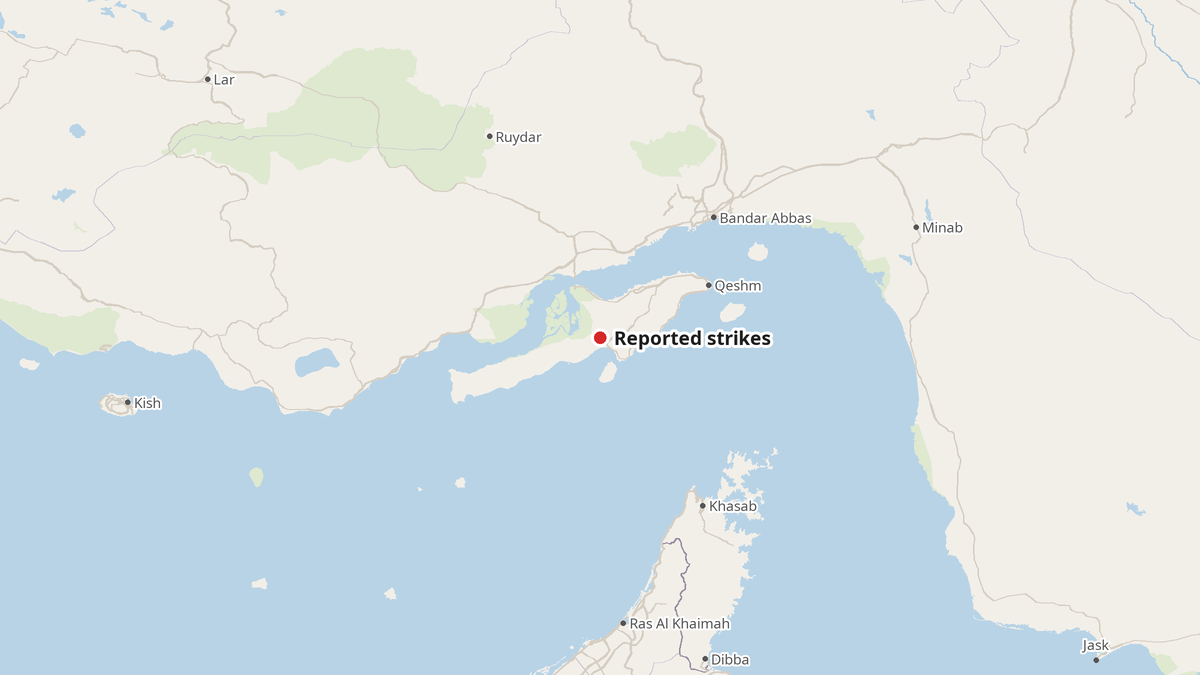
President Donald Trump confirmed Friday that U.S. forces carried out strikes on Iran's Qeshm Island, calling them "minor" even as he insisted Washington has made "a lot of progress" in talks with Tehran. The strikes were the first since Tuesday's midterm elections, and they landed in the Strait of Hormuz, the waterway that carried about one-fifth of the world's daily oil output before the war.
The Strikes
Iranian state media reported two missile strikes in the Suza area of the island. Tasnim, citing Reuters, said the missiles hit Qeshm, though it said there was no official information on damage. Trump didn't specifically confirm the island by name. "I don't want to talk about it," he told reporters.
What he did say was blunt. "We do minor strikes, but they knock out. They built a little bit of an anti-aircraft device, and we knocked it out in about 15 minutes, maybe five." Iran's army offered a different account, with IRIB reporting that air-defence forces intercepted and destroyed an American MQ-9 drone over Qeshm.
U.S. Central Command called the situation "relatively calm" and told Al Jazeera it was aware of reports but had no further comment. The United States had also struck the island Monday. A U.S. official told MS Now that action was a "defensive measure."
Leverage and Limits
Trump argued that economic pain is driving Tehran toward the table. "They have 300% inflation. Their navy's gone. Their airport, everything's gone, and they want to make a deal," he said. The International Monetary Fund's Oct. 13 report put the figure lower, forecasting Iran's consumer prices would rise by an average of 78.6% in 2026. Either number describes an economy under severe strain, made worse by the U.S. maritime blockade and reinstated sanctions.
Tehran isn't signaling surrender. Ali Bagheri Kani, deputy secretary of Iran's Supreme National Security Council, told IRIB, according to Press TV: "We must see practical measures by the Americans." Iran says it wants more than "paper commitments" before a new phase of talks. It has also demanded that Washington meet seven conditions before it opens the Strait of Hormuz, including ending the war "on all fronts," compensation, withdrawal of U.S. forces and lifting sanctions. It's unclear whether the United States would accept any of that.
Supreme Leader Mojtaba Khamenei warned Wednesday against the "slightest inclination towards submission." Hardline outlet Raja News said Trump shouldn't be allowed to "escape with a rushed agreement" and urged "maximize pressure on the US and energy prices."
Politics at Home
The war carried a domestic price. Trump acknowledged in a call with Fox News that it was partly to blame for Republican midterm losses, and Vice President JD Vance wrote on X Wednesday: "the reason we lost is the war."
Hamidreza Azizi of the International Crisis Group told CNN that Tehran reads the results as vindication. "The problem is that given the latest election results, the Iranians see no reason to offer Trump any nuclear concessions," he said. A regional official told CNN the risk of renewed war had eased after the Republican defeat, but escalation remained probable.
The military option is still live. Unnamed Pentagon officials told The New York Times that thousands of U.S. air and naval forces, aboard more than a dozen ships, are poised to resume major combat operations on Trump's orders. NBC News reported that some advisers believe the window is closing and want action before a new Congress takes office in January. Fox News noted that Nov. 9 brings a new moon, a condition senior U.S. officials called favorable for operations. Central Command hadn't received a new directive, according to reports citing a U.S. official.
Trump has swung between threat and optimism. Thursday he said, "I would rather not destroy the rest of the country if possible but maybe I'll have to. You'll know soon enough." Friday he said the war "may have been" going seven months but "we probably fought for three or four weeks, really fought."
Diplomacy and Pressure
Qatar rejected reports that negotiations had failed. Spokesperson Majed al-Ansari said on X that such claims serve "only those seeking to prolong the war and destabilise the region." Trump called Qatari Emir Sheikh Tamim bin Hamad Al Thani to discuss de-escalation, and Iranian negotiators have shuttled between Tehran and Doha.
The State Department's Rewards for Justice program, meanwhile, is offering up to $20 million for information on Iran's nuclear program, assets and associated individuals. Trump reiterated that Iran will never be permitted to obtain a nuclear weapon.
Why This Matters:
The Strait of Hormuz sits at the center of this standoff, and every day of disruption shows up in global energy costs that households and businesses pay. Iran's stated demands, including compensation and U.S. withdrawal, are far from what Washington has signaled it would accept, which suggests any deal will be hard to reach. Trump's "minor" strikes keep pressure on without full escalation, but advisers are reportedly pressing for a decision within weeks. The midterm results add a political clock. How the administration balances deterrence against the domestic cost of a prolonged conflict will shape both energy markets and U.S. credibility on preventing an Iranian nuclear weapon.
- iran
- donald trump
- qeshm island
- united states
- iran war
- us iran talks
- strait of hormuz
- midterm elections