
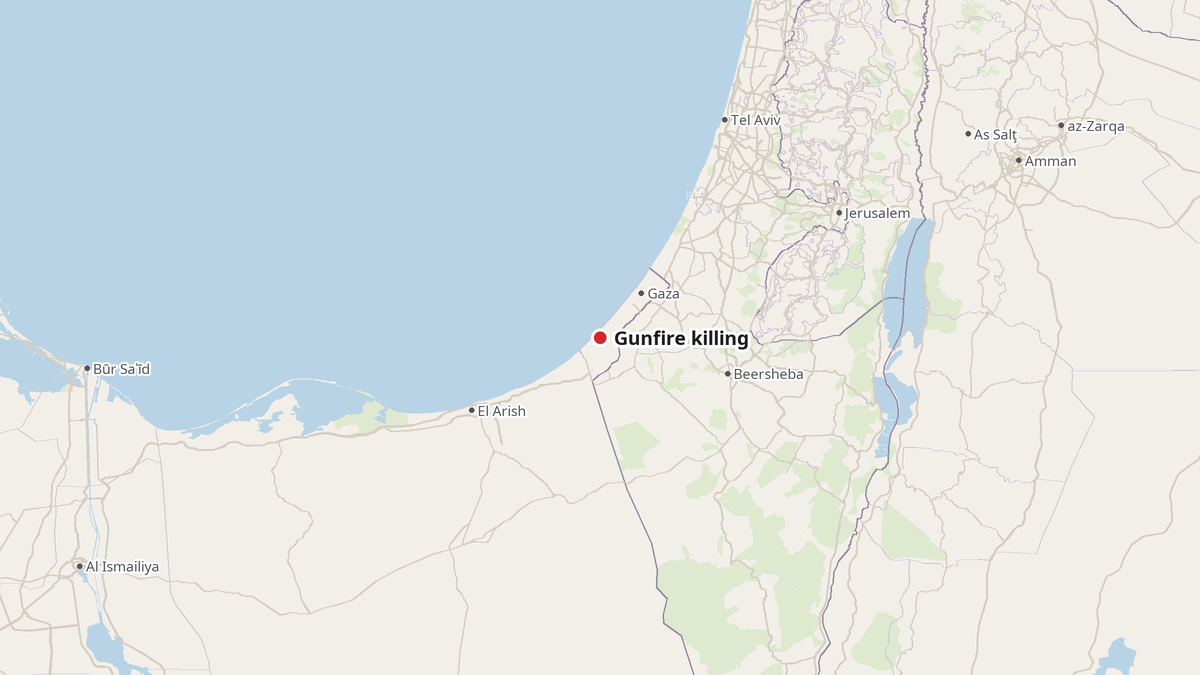
Israel says Hamas is trying to regroup and replenish its arsenal. On Tuesday, the Israeli military said it struck militants in two Gaza city neighborhoods, Zeitoun and Daraj, as a US-brokered ceasefire that took effect in October 2025 continues to fray more than a year in.
Palestinian health sources and media reported that at least seven people died in Israeli attacks across the territory that day. Among them were Fadi Rajab and his 13-year-old son Abubakr, killed when a strike hit a displacement shelter in Zeitoun, medics said. Media reports said a third Palestinian died in a strike on the Ghubain family home in Daraj. In Khan Younis, in southern Gaza, a man was killed by Israeli gunfire. Three more people died in a strike in the Sabra neighborhood of Gaza city, the Wafa news agency reported, and a fire broke out at a nearby tent camp for displaced people afterward.
The deaths of a father and a teenage boy are a human cost no honest account can wave away. The Israeli military offered little detail. It said only that it had struck militants in Zeitoun and Daraj, and it didn't immediately comment on the incidents in Khan Younis or Sabra. Those gaps matter. The public record on who was targeted, and why, remains thin.
The Security Picture
The ceasefire envisaged the eventual reconstruction of the Gaza Strip. It hasn't gotten there. Negotiators haven't agreed on terms for Hamas to disarm, nor on terms for Israel to withdraw its troops, who control about two-thirds of the territory. Residents have been ordered to leave areas under Israeli control.
The two sides describe the stalemate in opposite terms. Israel's position is that Hamas is using the pause to rebuild its fighting capacity. Hamas says it remains committed to the ceasefire agreement and accuses Israel of undermining it. The disarmament question sits at the center of the dispute. A group that launched the October 7, 2023 attack, in which Hamas-led fighters killed about 1,200 people in southern Israel, still hasn't agreed to give up its weapons. Israeli officials can point to that fact when they explain why they won't pull back from the ground they hold.
The Toll Since the Truce
The numbers cut both ways. Gaza's health officials say at least 1,600 Palestinians have been killed in Israeli attacks since the ceasefire took effect. Israel says four of its soldiers have been killed in the same period. More than 74,000 Palestinians have been killed in Israel's military offensive overall, according to Palestinian authorities, which don't distinguish between combatants and civilians in their figures.
That asymmetry in casualties is real, and so is the asymmetry in what each side is being asked to risk. Israel is being asked to withdraw from territory while the group that attacked it keeps its arms. Hamas is being asked to disarm while Israeli troops remain on two-thirds of the ground. Neither side has blinked, and the talks haven't produced a formula that either can sell to its own constituency.
What Comes Next
The ceasefire has now passed its first anniversary without a reconstruction plan in motion, a disarmament agreement, or a withdrawal timetable. Displaced families are still sheltering in tents and damaged buildings, some of them in neighborhoods that keep coming under fire.
Why This Matters: The ceasefire's central bargain, disarmament in exchange for withdrawal and rebuilding, remains unresolved, and each deadly incident erodes the little trust left between the parties. From a security standpoint, an Israeli pullback without verifiable disarmament would leave a group committed to attacking Israel free to rebuild near its border, the very scenario Israeli officials say they're trying to prevent. Yet the civilian toll, including children, gives Hamas and its critics abroad fresh material to press for Israeli restraint. Without a mechanism that disarms the militants and protects civilians, the pause looks less like peace than a slow-burning stalemate.
- gaza
- israel
- hamas
- ceasefire
- air strike
- palestinians
- zeitoun
- israeli military