
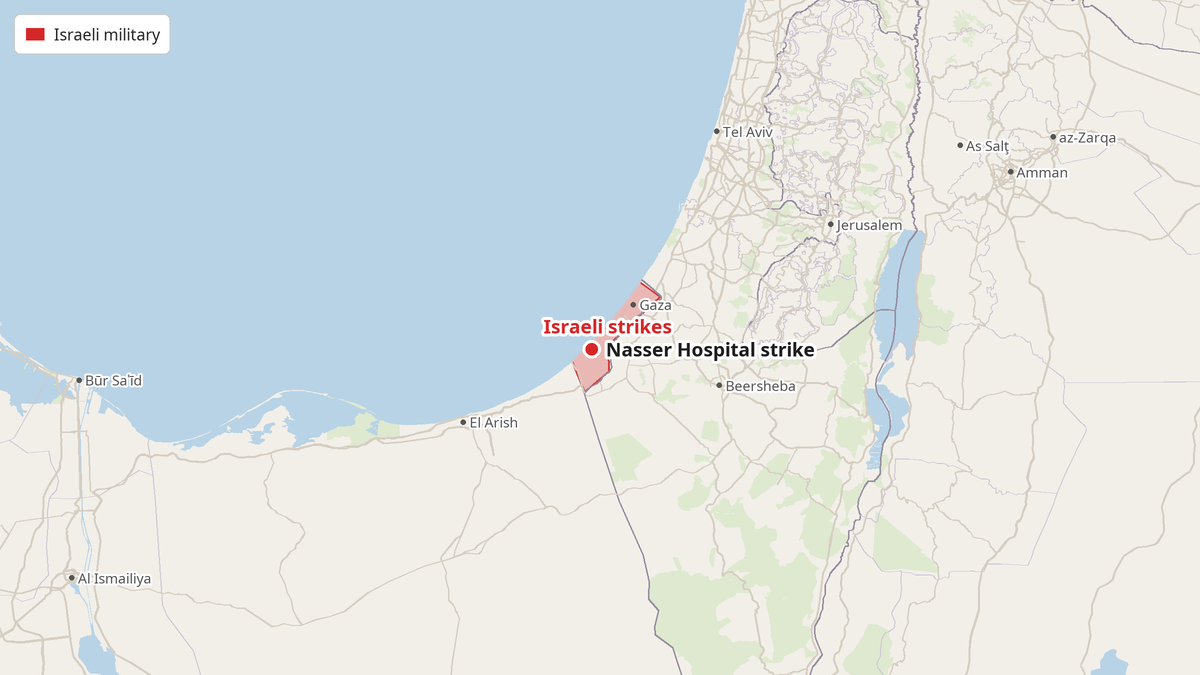
Six people died Thursday when an Israeli strike hit the surgery building at Nasser hospital in Gaza, including a child and a surgeon, according to Doctors Without Borders (MSF) and other organisations. Dozens more were injured. Israel killed at least 10 Palestinians in Gaza that day, at least six of them in the hospital strike.
The attack came one day ago, in the fourth year of the war.
The Strike and the Response
MSF said in a statement it "is utterly appalled and outraged" at the attack on the surgery building. The group said it had already treated two doctors and a third patient, all of whom needed surgery, in a separate building.
MSF also laid out the hospital's history under fire. "Since October 2023, the hospital has been hit by at least six airstrikes, in addition to repeated ground incursions, shelling and gunfire," the group said. "In no conceivable circumstances can attacks on functioning hospitals in Gaza be treated as normal or acceptable."
The base reporting on Thursday's strike doesn't include an Israeli military statement. It doesn't say what target the IDF says it was aiming at, whether any warning was issued, or whether Israel disputes the casualty accounts given by MSF and the other organisations. Those are the questions that decide how the strike is judged, and they remain unanswered in the public record available so far. The figures on the dead and wounded come from aid groups, not from independent verification or from Israeli officials.
The Question Behind the Warning
The World Health Organisation's director-general, Tedros Adhanom Ghebreyesus, wrote on X that the WHO has documented 1056 attacks on healthcare in Gaza since October 2023, resulting in 1010 deaths and 1725 injuries. He called for Gaza's healthcare infrastructure to be protected.
His statement carried a second demand that deserves attention. "Gaza's health facilities are lifelines for its people," he wrote. "They must be protected. They must never be militarised or attacked."
The word "militarised" sits there deliberately. International humanitarian law grants hospitals protection precisely because they are meant to be places of care, not cover for combatants. When armed groups use medical sites for military purposes, the protection they enjoy comes under dispute, and civilians inside bear the cost. The WHO chief's wording acknowledges that the conduct of all parties, not only Israel's, determines whether a hospital stays safe. Hamas, which runs Gaza and has openly sworn to destroy Israel, carries responsibility for where it places its fighters and weapons. The WHO figures count attacks and casualties, but the cited post doesn't say how many involved facilities that were being used for military purposes, a distinction that matters legally and morally.
Tedros also repeated a standing demand: "allow unhindered humanitarian access and let more medical and humanitarian supplies enter Gaza."
What Comes Next
Nasser hospital has absorbed repeated strikes, incursions and shelling across the war, MSF says, and it is still treating patients. Whether Israel releases its own account of Thursday's strike will shape how the incident is understood. So will any clarity on the hospital's use, and on the conduct of the armed groups operating in Gaza.
Why This Matters: Every strike on a hospital raises the same hard question: how does a democracy fight an enemy that embeds itself among civilians, while meeting the legal standards that protect those civilians? The WHO's own warning that health facilities "must never be militarised" puts responsibility on those who would turn them into military assets. For Israel, the cost of unexplained incidents is steep, because each one erodes diplomatic support while Hamas keeps its stated aim of eliminating the Jewish state. For civilians in Gaza, the cost is measured in lives. Clear Israeli disclosure of targeting decisions, and real pressure on Hamas to keep fighters away from medical sites, would serve both security and legitimacy.
- nasser hospital
- gaza
- israeli strikes
- doctors without borders
- world health organization
- tedros adhanom ghebreyesus
- attacks on healthcare
- humanitarian access