
Prime Minister Benjamin Netanyahu called on Saturday for a national unity government while warning that a government backed by Arab parties would threaten Israel. In the same statement, he said, “This is the time for unity,” and claimed that a government relying on “supporters of terror” would not fight terrorism. Unity, in his telling, has a membership test.
Unity on Netanyahu’s terms
In a pre-recorded video released on November 7, Netanyahu invited the parties of the so-called change bloc to join his outgoing coalition. He said it should include Likud, the ultranationalist Religious Zionism and Otzma Yehudit factions, and ultra-Orthodox parties, but didn’t say who should lead it. He promised that such a government would “permanently remove the nuclear threat from Iran, protect Israel as a Jewish state, and bring unity among us.”
He also alleged that “a government dependent on Hamas supporters won't fight Hamas” or defend IDF soldiers operating in Gaza and Lebanon. Netanyahu warned that an opposition government with “the Islamists” would “destroy Israel from within” and said Israel “would not survive” it. He invoked riots in Europe in recent weeks, which he blamed on “Islamists,” and warned of civil war. These are claims made by Netanyahu; the article provides no independent evidence for them.
His pitch has shifted since the October 27 election. Hours after polls closed, he said he would build a strong, national, right-wing coalition. On November 2, he called for a “broad national government” under his leadership. Netanyahu’s outgoing coalition won 53 of the Knesset’s 120 seats. Yashar party leader Gadi Eisenkot’s four-party change bloc won 48, while Ra’am and the Joint List won 19 and backed Eisenkot for prime minister. Together, those groups hold 67 seats.
The seat arithmetic and its conditions
President Isaac Herzog was expected to assign the task of forming a government the next day, after consulting incoming Knesset parties on Wednesday and Thursday. Eisenkot was expected to receive the first chance. He has said he won’t join a government with Netanyahu, but his own proposed terms also set limits on who could take part.
Eisenkot said he was open to parties and Knesset members who accepted four conditions: recognition of Israel as a Jewish, democratic, liberal and egalitarian state; commitment to the Declaration of Independence; military or national service for all citizens; and recognition of Hamas as a terrorist organization, alongside an obligation to destroy its military and governing power in Gaza. Avigdor Liberman, head of Yisrael Beytenu, withdrew his longstanding veto on partnering with ultra-Orthodox parties on Friday and said he was ready for “painful compromise” on ultra-Orthodox military service. Eisenkot continued to insist on mandatory service.
Some members of Eisenkot’s bloc and United Torah Judaism signaled they could cooperate, The Times of Israel reported. A source from the Shas Council of Torah Sages told Channel 12 that Shas wouldn’t oppose an Eisenkot-led government if the spiritual leader of United Torah Judaism approved it, saying, “There is no scenario in which Shas rabbis will act against United Torah Judaism rabbis.” Shas called reports it might join “total fake news” and said it was part of the right-wing bloc.
A protest outside the bargaining room
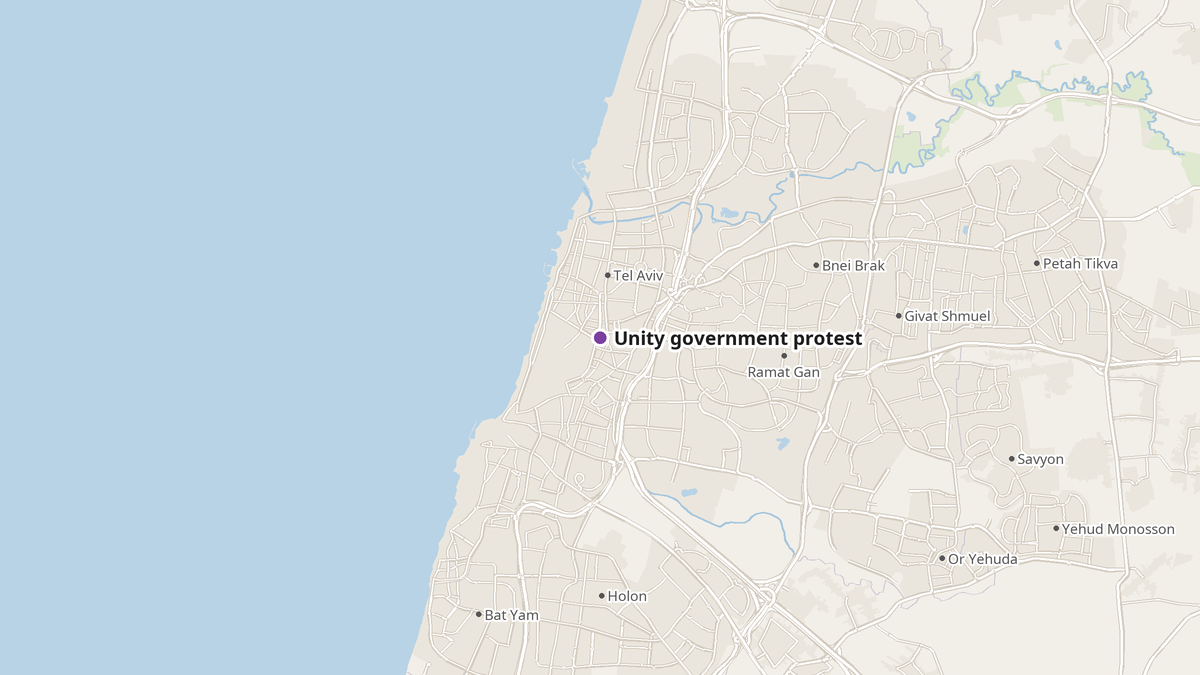
Hundreds gathered at Tel Aviv’s Habima Square to call for a government with Arab parties that would unseat Netanyahu. Hebrew- and Arabic-language banners read, “67 seats — embarking on a new path.” Protesters carried signs from Standing Together and Looking The Occupation In the Eye, beat drums, and chanted, “Without partnership there's no peace” and “No more divide and conquer, freedom and equality for all.” Some also demanded the release of journalist Abed Abou Shahadeh, detained on Wednesday on suspicion of contact with a foreign agent after traveling to Doha to interview former MK Azmi Bishara ahead of the election.
The slogans put partnership and equality into the public argument; the coalition negotiations put parties, service requirements, and governing power on the table. Arab media writers questioned whether a government led by Eisenkot would deliver substantial change, pointing to familiar coalition arrangements and pressure from the religious right. One commentary argued that changing the government’s composition alone wouldn’t resolve Israel’s structural crisis. Another said Arab support for Eisenkot reflected opposition to Netanyahu while noting Eisenkot opposed a Palestinian state and was associated with the “Dahiya doctrine.” The 67 seats have brought the bargaining into view. They haven’t settled what power will do with them.
- benjamin netanyahu
- israel
- unity government
- israeli election
- gadi eisenkot
- arab parties
- tel aviv protests
- coalition talks