
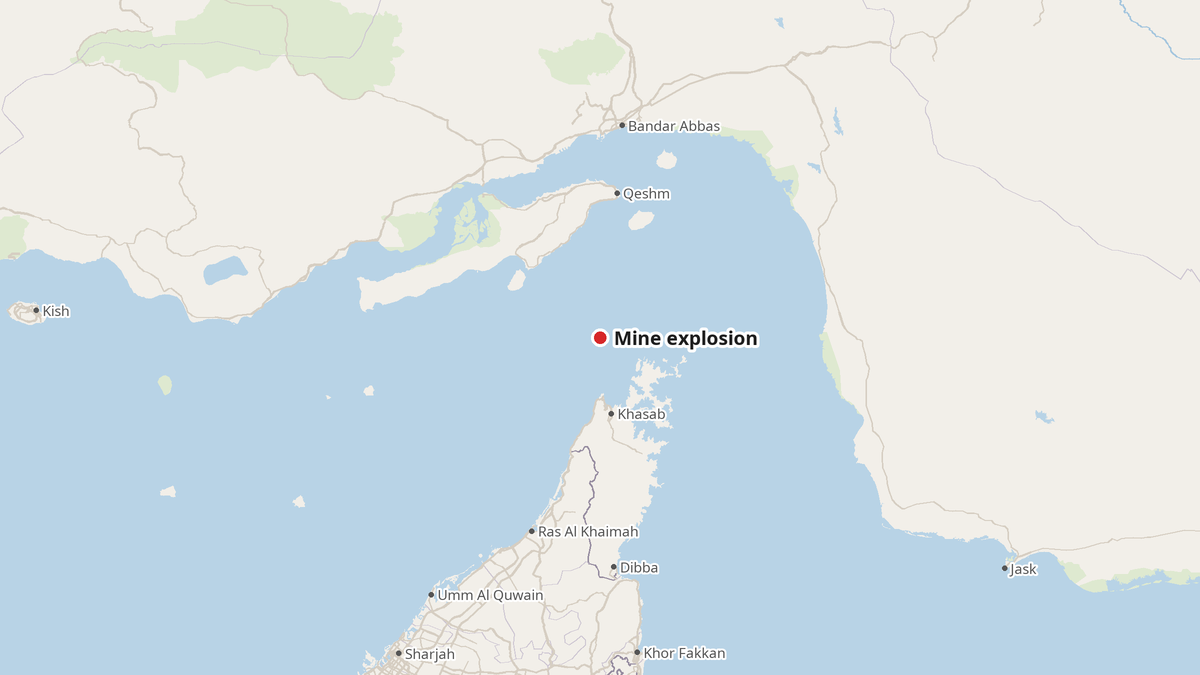
Iran's Revolutionary Guards navy said Friday that a tanker carrying liquefied gas struck a naval mine and exploded in the Strait of Hormuz, according to Iranian state media. The Guards said the vessel was using what they called an "unauthorised and dangerous route." The claim could not be independently verified.
The account is already inconsistent. Reuters copy carried by the Times of Israel and L'Orient Today said the type of gas wasn't specified in the state media report. The New Arab and Ynet described the cargo as liquefied natural gas. AP, citing the state-run IRNA news agency, called it a liquefied petroleum gas tanker. The vessel wasn't identified, and there's no information on casualties or damage.
The Security Picture
What's not in dispute is the pattern. The Guards told IRNA the vessel ignored repeated warnings while transiting the eastern part of the strait. Iran continues to warn ships not to pass through the strategic lane without its approval. AP said there was no immediate report of the incident from the United Kingdom Maritime Trade Operations, the British military agency that monitors incidents at sea.
This is the latest in a string. Iranian media reported Thursday that four oil tankers were hit by explosions after ignoring warnings and entering what Iran considers restricted areas. On November 12, RFE/RL reported, Iran's army said two oil tankers caught fire after hitting naval mines in the eastern part of the strait. Earlier in the week, the IRGC claimed explosions on two supertankers carrying more than four million barrels of oil.
The numbers are stark. At least 10 ships were hit in the first 10 days of November, after 37 attacks in October, the highest monthly tally since the conflict began in late February, according to data from the Washington Institute for Near East Policy. The war is now in its ninth month.
A Chokepoint Under Pressure
Tankers continue to face attacks despite a rebound in traffic and expectations of de-escalation in the US-Israeli war on Iran. Those expectations are reflected in falling oil prices. But the attack tally cuts against any assumption that the waterway is calming. Tehran is asserting a right to approve passage through an international shipping lane, and it's backing that claim with force, or at least with the claim of force.
The Guards' framing deserves scrutiny. By describing the transit route as "unauthorised and dangerous," Iran casts the explosions as the consequence of ships' own choices rather than the result of mines its own forces control or claim authority over. Whether the mines are Iranian or whether Iran is simply claiming credit remains unverified in the reporting.
The Nuclear Backdrop
Ynet carried the report alongside an IAEA warning that Iran's refusal to cooperate with inspectors has left major questions about its nuclear program unresolved. Those include the status of its enriched uranium stockpile and a newly declared enrichment facility. The Times of Israel liveblog placed the item alongside US President Trump's statement that the time has "long since passed" for an agreement with Tehran. Trump claimed, "we've got their money... and we've got their strait."
That claim sits uneasily next to Friday's report. If Washington holds the strait, Iran's navy is still announcing explosions in it.
Why This Matters: The Strait of Hormuz carries a large share of the world's energy exports, so a contested passage regime affects far more than the belligerents. Iran is pairing maritime coercion with stonewalling of nuclear inspectors, and the IAEA says key questions about its enriched uranium remain unanswered. From a security standpoint, falling oil prices and talk of de-escalation can mask a harder reality: attacks hit a record in October and continued into November. Any diplomatic track has to account for a regime that restricts shipping and limits inspections at once. That's a perspective on the facts, not a conclusion drawn from them.
- strait of hormuz
- naval mine
- tanker explosion
- iran
- revolutionary guards
- liquefied gas
- oil tankers
- shipping attacks