
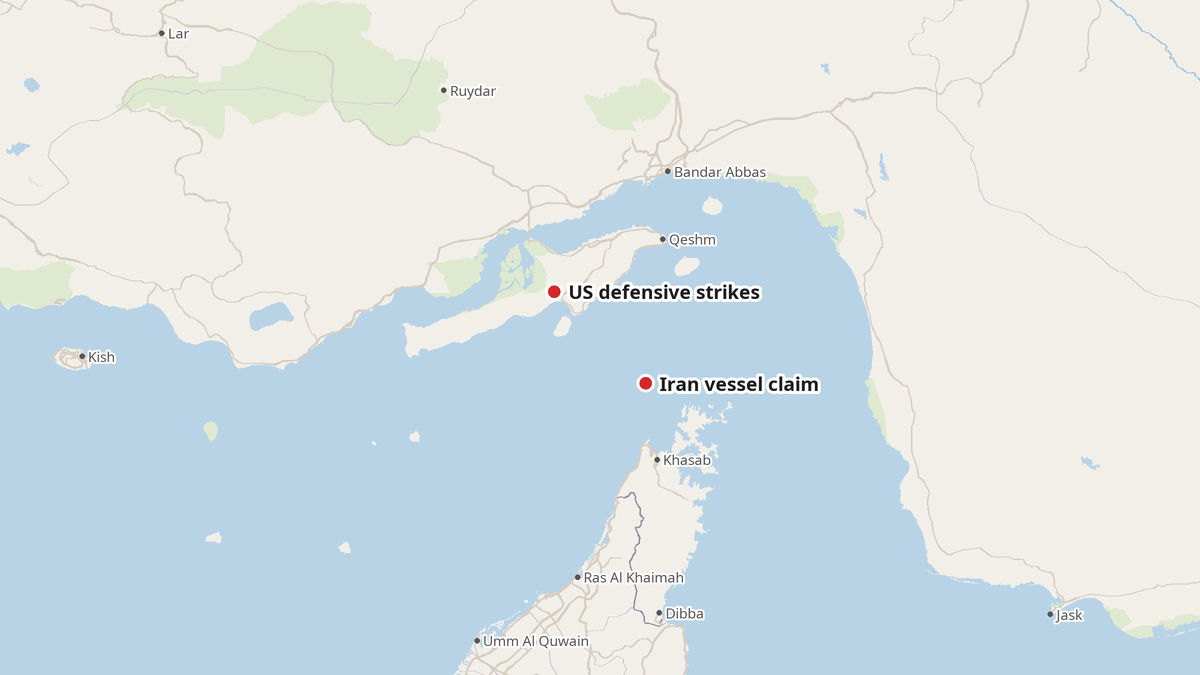
The United States struck Iran’s Qeshm Island on November 2, hours before US midterm elections, as officials described the operation as limited and defensive while both governments kept military threats and diplomatic talks in play. The cause, target and any casualties on the island weren’t independently confirmed in the material reported.
The Wall Street Journal first reported the strikes, citing US officials. One US official told Reuters the strikes were defensive measures against Iranians using surface-to-air missiles against US assets. A US official told The Jerusalem Post: "IRGC (Islamic Revolutionary Guard Corps) personnel launched a missile from Qeshm Island toward an American aircraft over the Strait of Hormuz, and in response, the Americans launched a surface-to-air missile in self-defense." Fox News and RFE/RL also reported US accounts that Iranian fire was directed at a US aircraft.
Iranian state media outlet IRNA reported explosions on Qeshm on November 2. Gulf News and Daily Sabah reported five explosions in rapid succession, while residents reportedly saw two aircraft over the island. Fars also reported explosions in waters off Bandar Lengeh, without attribution. The reports did not establish what was hit or whether anyone was injured.
A ‘limited’ campaign, kept quiet
Qeshm sits at the mouth of the Strait of Hormuz, a major route for energy shipments, and is Iran’s largest island. RFE/RL reported, citing the Wall Street Journal, that the island has a large underground missile facility, a naval base and a major desalination plant. US forces have targeted the island in previous rounds of fighting, and US officials have discussed the possibility of seizing it.
The Wall Street Journal described the latest attack as part of a series of limited US strikes carried out secretly in recent weeks. RFE/RL reported that previous US actions included strikes on missile-launch sites, an attack on a dhow several days earlier and a strike on a commercial vessel that attempted to break the US blockade of Iranian trade several weeks earlier. The Journal said the campaign was kept quiet to avoid signaling an intention to resume major combat operations.
US officials have discussed further air strikes, tighter economic sanctions and an expanded blockade of Iranian trade. US Central Command chief Admiral Brad Cooper visited the White House last week to brief Trump on the conflict, the Journal reported. Additional missile defenses and munitions had moved into the region in recent weeks; US officials had also told Gulf countries to prepare for a short, intense military campaign shortly after the election, according to the Journal.
Missile claims and negotiation claims
Iran’s Revolutionary Guards said their forces downed and captured a US MQM-170 drone near Qeshm, and claimed they destroyed an MQ-9 east of the strait and captured another MQM-170 south of Qeshm. Iranian media separately reported that Iranian forces destroyed an unmanned US vessel. Those claims couldn’t be independently verified. US Central Command said all American unmanned surface vessels in the region were accounted for, US officials rejected other Iranian drone claims, and the Pentagon did not confirm them.
Trump said Monday that he wasn’t considering an immediate strike after the election and pointed to a possible diplomatic breakthrough. On Truth Social, he wrote: "Iran wants a settlement, as soon as possible." In an interview with Fox News, he said of Pickaxe Mountain, a site linked to Iran’s nuclear program: "We might have to go after Pickaxe. We can do that in one hour, as soon as we want, at any time we want." He added that renewed fighting "could happen if they don't make a deal," but said there was "a very good chance we make a deal."
US Vice President JD Vance said Washington and Tehran had held "a number of good conversations" and that the administration would keep working toward a negotiated settlement. Iran’s Foreign Minister Abbas Araghchi said indirect talks were underway, describing consultations as "intensive." Iran’s Foreign Ministry spokesman Esmail Baghaei said on November 2 that "the ball is in the US court." The statements arrived alongside strikes and public threats, not instead of them.
The strait as leverage
A senior Iranian official said Tehran was prepared to reopen the Strait of Hormuz within two days if Washington accepted its longstanding demands. Iran’s reported conditions included ending the war on all fronts, unfreezing Iranian assets, lifting oil sanctions and ending the US counter-blockade of Iranian ports. The official said the sides remained far from a deal to end the war. Qatari mediators traveled to Tehran on Monday night to discuss a draft US-Iran deal that had been under negotiation for eight days.
The UK Maritime Trade Operations center said a vessel transiting the strait was struck by an "unknown projectile" on Sunday off the coast of Lima, Oman. The vessel and crew were safe, and there was no environmental impact. The IRGC Navy said three oil tankers entered unauthorized shipping lanes on Tuesday, struck mines and caught fire; the US military denied Iranian claims that mines had been laid, saying internationally recognized routes had been cleared by US forces.
The conflict’s costs also surface in the price of oil and the US election calendar. Brent crude fell more than 8% to $104.1 a barrel as of 5:39 a.m. in Beijing on Tuesday, November 3, according to OilPrice.com. The war and its effect on gasoline prices and the economy were a vulnerability for Republicans seeking to retain control of Congress. Trump said Monday: "I don't know if you even call it a war, because we haven't been doing any fighting for months." The same report said the war had cost US taxpayers at least $47 billion, while thousands of US troops remained in waters off Iran to maintain a naval blockade.
- iran
- qeshm island
- united states
- strait of hormuz
- us airstrikes
- islamic revolutionary guard corps
- donald trump
- us-iran tensions