
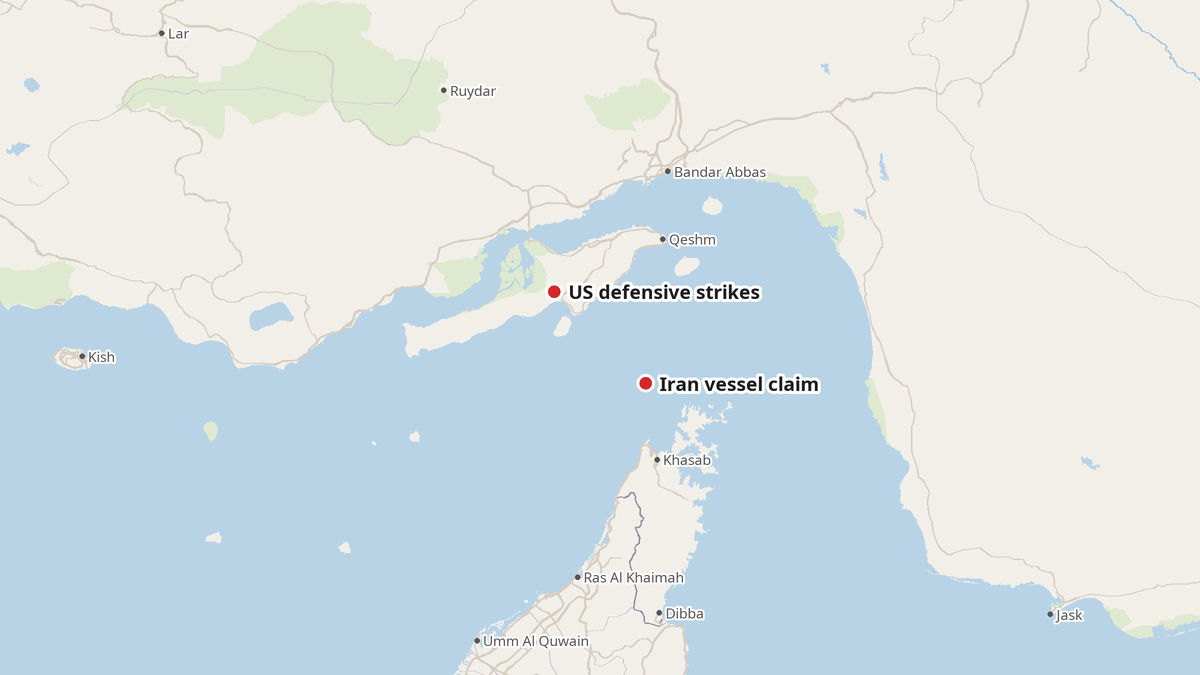
The United States struck Iran's Qeshm Island in the Strait of Hormuz on November 2, US officials said, hours before American voters went to the polls. Residents reported five explosions in rapid succession and saw two aircraft over the island, according to Gulf News and Daily Sabah. The cause, the target and any casualties weren't independently confirmed.
Washington called the operation limited and defensive. One US official told The Jerusalem Post that Revolutionary Guard personnel launched a missile from Qeshm toward an American aircraft over the strait, and that US forces answered with a surface-to-air missile "in self-defense." Iran's state media outlet IRNA confirmed explosions on the island. Qeshm is Iran's largest island in the strait. According to the Wall Street Journal, as cited by RFE/RL, it holds a large underground missile facility, a naval base and a major desalination plant.
A Quiet Campaign
The Journal described the Qeshm strike as the latest in a series of limited US attacks carried out secretly in recent weeks. They included strikes on missile-launch sites, an attack on a dhow several days earlier, and a strike on a commercial vessel that tried to break the US blockade of Iranian trade. The campaign was kept quiet, the Journal reported, to avoid signaling an intent to resume major combat. US officials had also told Gulf countries to prepare for a short, intense military campaign shortly after the election.
Iran's Revolutionary Guards claimed they downed and captured US MQM-170 drones near Qeshm and destroyed an MQ-9 east of the strait. None of that could be independently verified. US Central Command said all American unmanned surface vessels were accounted for, and the Pentagon didn't confirm the claims.
The Diplomatic Track
President Donald Trump said Monday "No" when asked whether he was considering an immediate strike after the election. "If I can make a deal, I'd rather do it — save a lot of lives," he said. He also warned that renewed fighting "could happen if they don't make a deal," and that the US "might have to go after Pickaxe," a site linked to Iran's nuclear program, "in one hour." Vice President JD Vance said he felt "pretty good about the prospects for potentially coming to a negotiated settlement."
Iranian officials struck a harder note while keeping the door open. Parliament speaker Mohammad Bagher Ghalibaf, identified as Tehran's chief negotiator, said Iran stood ready for battle "with its finger on the trigger" but had given Washington a "rational response." "The ball is now in America's court to prevent war," he said. A senior Iranian official told Reuters that Tehran could reopen the Strait of Hormuz within two days if Washington accepted its demands, and that the sides remained far from a deal to end the war. Qatari mediators traveled to Tehran Monday night to discuss a draft that had been under negotiation for eight days.
Fear in the Gulf
Governments closest to the fighting sounded the most alarm. UAE presidential adviser Anwar Gargash said that if the US and Iranian positions aren't bridged, "we have to worry about the worst." Egypt's Foreign Minister Badr Abdelatty warned the next escalation "will be more dangerous, more destructive, and it will lead to nowhere." Qatar and the UAE ran security drills, including at airports. Schools in Riyadh were set to stay online during the week.
The war has spread beyond the strait. Fighting between Saudi Arabia and Yemen's Houthis intensified in recent weeks, with the Houthis hitting Saudi oil facilities and airports, including Riyadh's international airport, and drawing Saudi air strikes on Yemen. Yemen has been mired in civil war since the Houthis pushed the internationally recognized government out of Sana'a in 2014. Other US allies warned that further strikes could push the Houthis to intensify attacks on Saudi Arabia and Red Sea shipping, and could draw in Iran-backed militias in Iraq.
Meanwhile, Israeli Prime Minister Benjamin Netanyahu was pushing for another wave of strikes after the election, according to two regional officials and another person familiar with the matter. Trump wouldn't commit to military action during a weekend call, according to a person briefed on it. The Israeli military told Agence France-Presse it had no involvement in the Qeshm strikes.
The Cost So Far
The war began with US-Israeli surprise strikes on Iran in late February, according to Daily Sabah, and has stalled for months. It has cost US taxpayers at least $47 billion, according to an Associated Press report. Thousands of US troops remain in waters off Iran enforcing a naval blockade, with a third aircraft carrier and thousands more troops on the way. In October, the strait saw its most attacks on commercial ships since March. This past Sunday, a vessel off Oman was struck by an "unknown projectile"; the crew was safe, the UK Maritime Trade Operations center said.
Oil prices fell sharply Monday on hopes for a deal, with Brent dropping more than 8% to about $104 a barrel. Analysts offered a cautious reading. Brett Erickson of Obsidian Risk Advisors said Iran "has shown considerable restraint" in answering similar incidents. Gregory Brew of Eurasia Group said both sides "are observing certain risks of engagement as they fight over the status of the strait."
Why This Matters: Both governments say they want a settlement, yet both keep firing. The strikes on Qeshm land in a region where civilians have already absorbed attacks on airports, oil facilities and shipping lanes, and where Gulf leaders openly say they're bracing for a worse round. The ones who pay when diplomacy stalls are rarely the officials trading demands; they're the crews on struck vessels, the residents on a small island hearing explosions, and families in Yemen and Saudi Arabia living under the widening fighting. If Trump's stated preference to "save a lot of lives" is to mean anything, the Qatari-brokered talks now carry most of the weight. The alternative, as Egypt's foreign minister put it, leads "nowhere."
- iran
- qeshm island
- united states
- strait of hormuz
- us airstrikes
- islamic revolutionary guard corps
- donald trump
- us-iran tensions