
Petrol bombs thrown at gendarmes and police in eastern Paris have prompted an attempted murder investigation, prosecutors told AFP on Sunday. The case grew out of Saturday's third consecutive weekend of mass protests over living costs and failing schools. Images of a security officer engulfed in flames from the waist down have forced the government to confront a question it would rather avoid: how long can it tolerate street violence while its room for financial concessions shrinks?
Violence Against the State's Officers
On Saturday, October 31, clashes erupted in Paris and several other cities after hundreds of thousands marched. The interior ministry counted 320,000 participants, 70,000 of them in Paris. A coalition of youth groups and student unions claimed nearly half a million, according to bne IntelliNews. France 24 called the day "Act III."
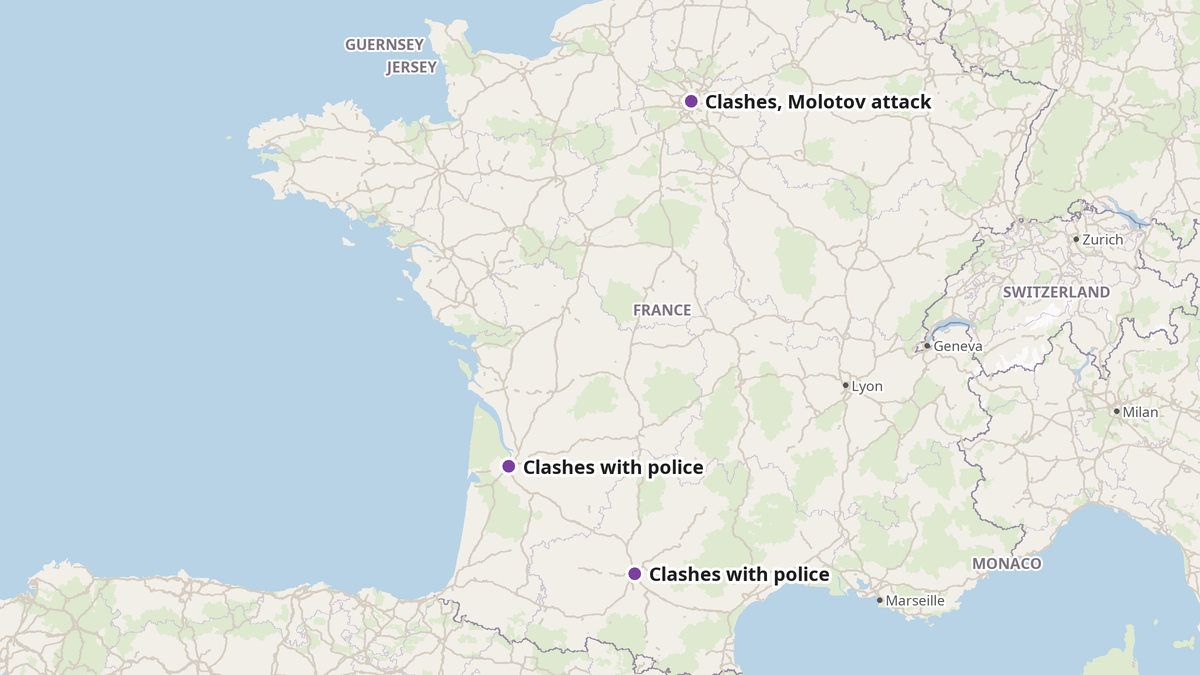
The Paris police prefecture said several hundred rioters attacked security forces with projectiles, including a Molotov cocktail. Interior Minister Laurent Nunez decried an "extraordinary" level of violence from some rioters. "Explosive devices were thrown at around 15 gendarmes as well as police officers," the prosecutor's office said. Gendarmes are military police officers and part of the French armed forces. Prosecutors opened an investigation for "attempted murder of persons vested with public authority."
AFP photos and video showed a homemade incendiary device exploding at the feet of an officer, setting his lower body ablaze. Prosecutors said reported injuries include second-degree burns. The gendarme told French television of "skin that stings" and a "rain" of projectiles. No suspects had been arrested in connection with the attack at that stage.
Marine Le Pen said those responsible must be "punished with the utmost severity," calling the images "unbearable." AP reported three officers injured and a car set ablaze. Masked groups hurled fireworks at officers across from the Eiffel Tower, sending tourists fleeing. Masked protesters prised up paving stones and threw them at police, who answered with tear gas and baton charges, bne IntelliNews reported. Police also fired tear gas in Lyon.
Order Restored, But at a Price
More than 770 people were arrested over the weekend, the interior ministry said. AP put the figure at 779 as of Saturday night, against 2,628 on October 17 and 1,314 the previous weekend. About 70,000 police were deployed nationwide, a national police official told AP.
Authorities expressed relief that the violence fell short of October 17, when a city hall was torched and more than 2,000 stores were looted in hours of unrest that authorities seemed unprepared to control. About 20 businesses were affected Saturday, according to France's Chambers of Commerce and Industry. CCI France voiced concern about retail activity ahead of the year-end holiday season.
The Fiscal Squeeze
The government announced measures aimed at student demands, including replacing the university admissions platform and providing loans for school renovations. Students said they didn't go far enough. President Emmanuel Macron argued that "young people have been heard." Pierre Sourzat, head of the "Lycéens!" group, countered: "the president hasn't listened to us. It's smoke and mirrors." He said the admissions overhaul fails to address the shortage of higher education places, and that the class-size plan covers only 10th grade. "We were asking for all year groups," he said.
The room to manoeuvre is narrow. With the eurozone's second-largest economy on the brink of recession and under pressure to rein in its debt, the government has limited scope to appease protesters through additional spending, France 24 reported.
What Comes Next
High schools reopen Monday after a two-week autumn break. Sourzat told RMC that blockades would restart, with some schools blocked from Monday and more from Tuesday. Union Etudiante spokeswoman Sabrine Kharbach said blockades of universities and high schools would take place Tuesday and Thursday. Police are preparing for more tensions, the police official told AP. The movement began in the lycées on September 17, about six weeks ago, over dilapidated school buildings, teacher shortages and the Parcoursup admissions system.
Why This Matters: Two things are colliding in France. The first is the basic question of whether the state can protect those who enforce its laws; an officer set alight at a demonstration is no ordinary public-order incident. The second is fiscal: a government facing recession and debt pressure can't simply spend its way out of discontent, and eurozone partners are watching. For a country at the heart of the European project, the combination of street violence, looted shops ahead of the holiday season and constrained budgets raises hard questions about governability. Restoring public trust will depend on visible order and credible, affordable reform. Promises the treasury can't fund will not do it.
- france protests
- paris
- student protests
- cost of living
- marine le pen
- emmanuel macron
- laurent nunez
- parcoursup