
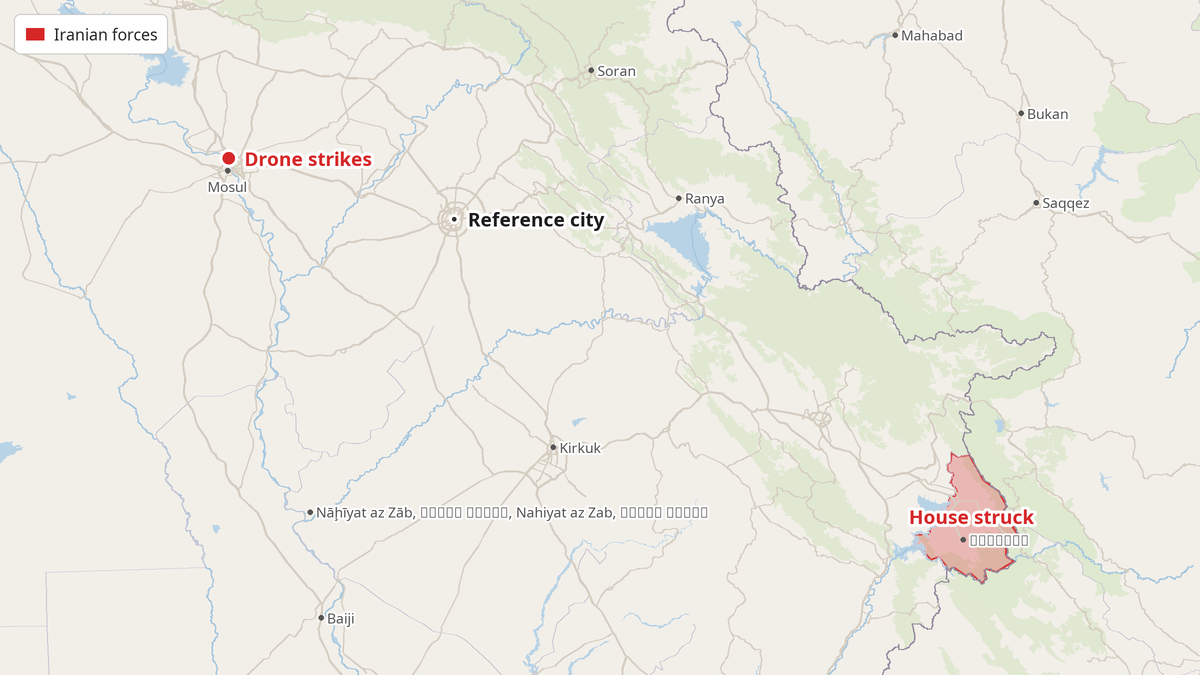
Iranian drone strikes hit Kurdish Iranian opposition sites in northern Iraq on Wednesday, while Tehran warned of a wider response if fighting with the United States resumed. The strikes and threats landed alongside a U.S. election result that Iranian officials celebrated, but which did nothing to quiet warnings from either government. Civilians and communities across the region remain caught beneath the state monopoly on violence.
Rudaw reported that two explosive drones struck a Komala base in the Alana valley of Balisan, about 90 km northeast of Erbil, at around 8:45 a.m. Komala said the attack caused material damage but no casualties, and that its forces at the site were unharmed. A separate strike damaged a house in Tawella, in Halabja province, early Tuesday. “We don't know what happened. We haven't seen any debris. Our house sustained heavy damage; our glass, doors, and windows are all broken,” homeowner Alwan Abdullah told Rudaw.
Ballots, Threats and the War Apparatus
Democrats captured majorities in both the Senate and House in Tuesday's U.S. midterm elections. Two senior Iranian sources said Tehran welcomed the result but feared President Donald Trump could seek to compensate with a military strike. Parliament Speaker Mohammad Baqer Qalibaf posted: “Conscience or the cost of living, Americans said NO TO WAR, and we endorse this message.” He warned that if Washington ignored the vote for change, “it will learn our NO comes with a Nightmare.”
Iran's Supreme Leader Mojtaba Khamenei said U.S. hostility would persist regardless of which party held power. He rejected “even the slightest inclination towards submission” to the United States and said Iran's response to renewed U.S. aggression would be on a much greater scale. The Iranian Foreign Ministry spokesperson also warned that ignoring the election result would bring consequences “far beyond what you have already witnessed.”
The other side's officials described the war as an electoral cost. President Donald Trump said it was “partly” responsible for his party's losses. Vice President JD Vance wrote that “the reason we lost is the war,” and said an honest discussion should start there. Top Senate Democrat Chuck Schumer said the war “must end” and that the incoming Democratic majority could use government funding to press for that goal. The vote changed who holds congressional power; the military threats remained on the table.
Civilians in the Crossfire
Hamidreza Moghadamfar, an adviser to the Revolutionary Guard Corps commander-in-chief, said Iran would broaden its response beyond U.S. military bases if Gulf states allowed Washington to launch attacks from their territory. He named the UAE and Bahrain among countries that could face a wider response. Iran has already responded to the U.S. and Israeli attacks on Iran with strikes on Israel and Gulf states hosting U.S. bases. The conflict also spread to Lebanon and Yemen, while Tehran declared the Strait of Hormuz closed and the United States imposed a naval blockade on Iran.
Ali Ranjbari, head of Komala's relations, called the attack an “Islamic Republic's drone attack on Komala Peshmerga” and accused Iran's Islamic Revolutionary Guard Corps of carrying it out. He said it formed part of a wider Iranian campaign to spread the conflict to Iraq and pre-empt a Kurdish uprising. Komala is one of five Kurdish groups in a coalition opposing the Iranian regime. Iran has sought to persuade Iraq to expel the dissident groups, and there have been more than 1,000 Iranian attacks targeting the Kurdistan Region of northern Iraq with drones and missiles.
The Kurdistan Regional Government's leadership in Erbil has criticized the Kurdish Iranian groups and expressed concern that they could draw the region into conflict. The KRG faces pressure over the groups. An Iranian ambassador said Baghdad had agreed to expel them or hand their members over to Tehran; an Iraqi official who attended the security meeting disputed that account, Rudaw reported.
Government Rallies, Government Messages
Thousands marched in Tehran at a government-organized demonstration marking the 47th anniversary of the U.S. Embassy seizure. Demonstrators burned American and Israeli flags, chanted “Death to America” and “Death to Israel,” and displayed effigies of Trump and Israeli Prime Minister Benjamin Netanyahu. One demonstrator, Hananeh Jahed, said Trump had “gone too far in everything.” Zahra Nadiminejad said U.S. voters had “finally figured out that this is Iran, and they can't just come in here and do whatever the hell they want.” She added that hostility toward America would continue regardless of which party won.
The government-organized rallies celebrated the election while officials warned that partisan shifts would not change Washington's hostility. Beyond the staged messages, the strikes, threats, damaged homes and military blockades show what the region's rival governments keep in motion: decisions made by state officials, paid for by people who don't get to decide when the next attack comes.
- iran
- united states
- drone strikes
- midterm elections
- strait of hormuz
- komala
- iraq
- military deterrence