
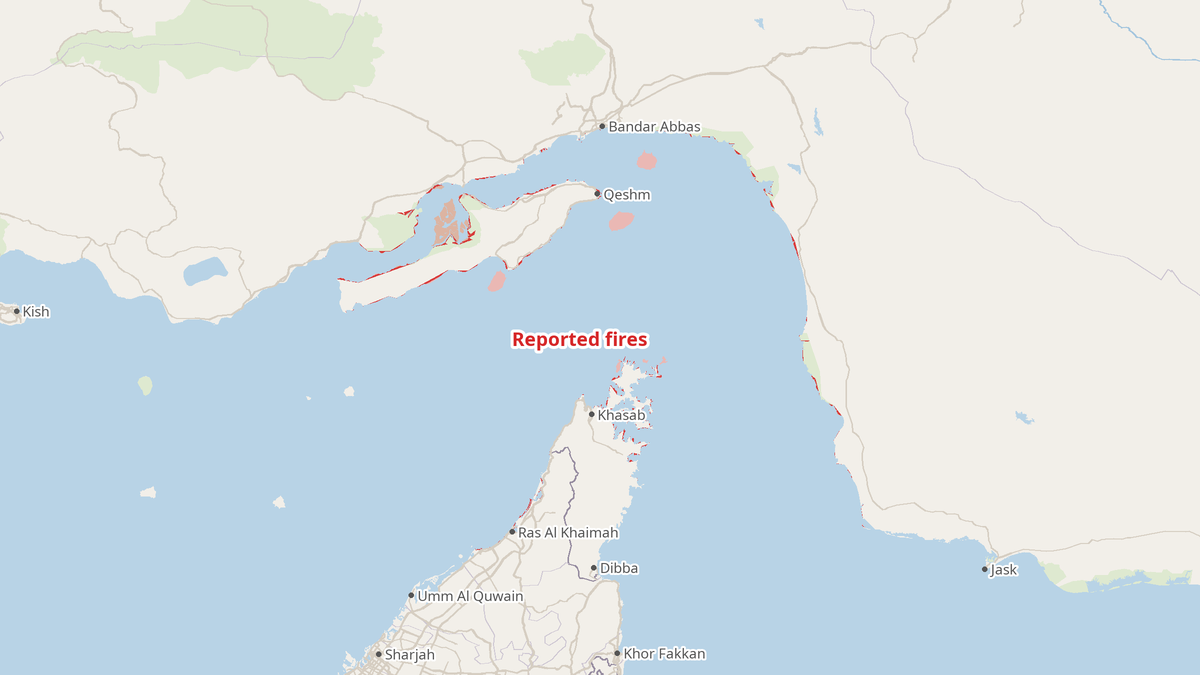
Iran's Islamic Revolutionary Guard Corps said two oil tankers and a tugboat caught fire in separate incidents in the Strait of Hormuz overnight, the latest claim from a force that has throttled one of the world's most important shipping lanes since the war began on February 28. The claims have not been independently verified.
The account came from the Guards themselves, relayed through Iranian media. That matters. Nobody outside the IRGC has confirmed what happened on the water, or why.
The Guards' Version
The New Arab reported the IRGC's claim that a large oil tanker attempting to use an "illegal passageway" south of the Strait caught fire after striking a mine and was brought to a halt. Another supertanker was stopped by a large fire while exiting the eastern Strait, the Guards told Fars news agency. A tugboat approaching to extinguish that fire also caught fire.
Note the phrasing. A mine, by the Guards' own account, was in the water. And a vessel using what Tehran calls an "illegal passageway" ended up crippled. The IRGC presents this as the consequence of ships defying its rules in an international waterway.
The Guards made a second claim. Fars reported that the IRGC navy's electronic warfare unit took control of two LUCAS drones, a US-developed model whose name stands for Low-cost Uncrewed Combat Attack System. The National noted that those drone claims, too, remain unverified in the reports reviewed.
A Chokepoint Under Pressure
The New Arab reported that Iran has severely restricted traffic through the waterway since the war began. The strait normally carries about one-fifth of global oil consumption. When a single regime can squeeze that flow at will, the effects reach well beyond the Gulf.
Washington has responded with force of its own. The United States imposed a blockade on Iranian ports and helped tankers travel through the strait. US Central Command said last month that it had helped Gulf countries export 1.5 billion barrels of oil through Hormuz since the summer. Those barrels belong to Gulf states that never chose this confrontation.
Escalation Risk
The National placed the overnight reports amid heightened regional tensions and noted that renewed US military action could lead to wider conflict. The New Arab reported that focus is returning to Iran and Hormuz after the US midterms.
The pattern is familiar. The IRGC makes claims of fires, seizures and electronic takeovers through friendly outlets. Verification lags. Meanwhile commercial shipping, insurers and Gulf exporters absorb the risk, and the Guards keep their hand on the valve. The war is in its first year as of November 5, 2026, and the strait remains its most consequential pressure point.
Why This Matters: Hormuz is where Iran's leverage is most direct. A force that can restrict a lane carrying roughly one-fifth of global oil consumption can impose costs on every importing economy, not just its adversaries. The US blockade and escorted transits show that keeping the strait open now depends on sustained military commitment. From a security standpoint, the unverified claims of mines, fires and captured drones underline how little transparency exists on the water, and how quickly one incident could draw in more powers. Gulf exporters, who moved 1.5 billion barrels with US help since the summer, remain exposed to whatever Tehran decides next.
- strait of hormuz
- iranian revolutionary guard corps
- oil tankers
- tugboat
- lucas drones
- ship fires
- iran
- oil shipping